InvenioRDM v14.0 released
InvenioRDM v14.0 was just released on August 7th 2026, and it's jam-packed with features, improvements and fixes! This is a big one, so let's get into it.
Try it
Want to see it in action? Go to the demo site. If you want to install it, follow the installation instructions!
Release Notes
See the full release notes for all the details, and the upgrade guide for instructions on how to upgrade from your v13 instance to v14.
What's new?
Administration panel: users and roles
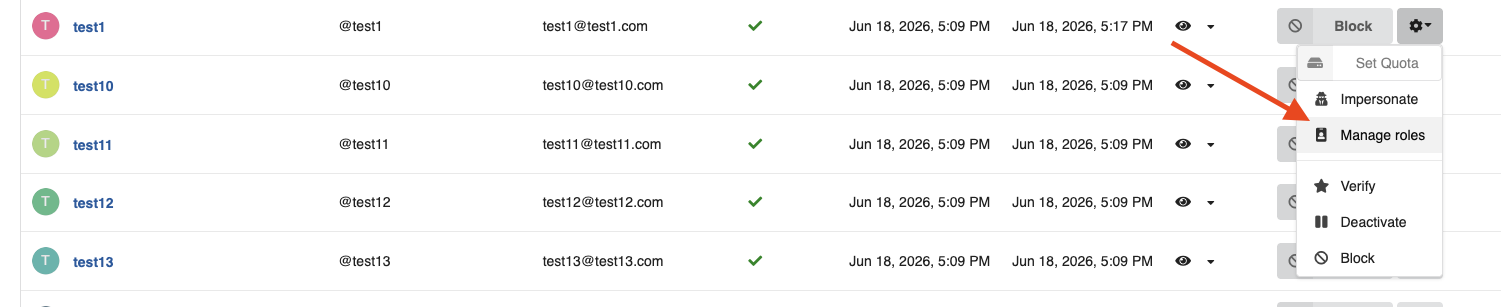
Administrators can now manage user roles directly from the administration panel.
Community membership requests
Users can request to become members of communities directly. This feature is opt-in per community and feature-gated at the instance level.

Community reviews for each record version
It is now possible to require a review for all record versions, subject to custom code on the instance level.
DOI registration with Crossref
DOI registration with Crossref, instead of or in addition to DataCite, is possible. Crossref has a different metadata schema than DataCite and supports textual content types such as journal articles, books, conference proceedings, preprints, posters or dissertations.
Files modification
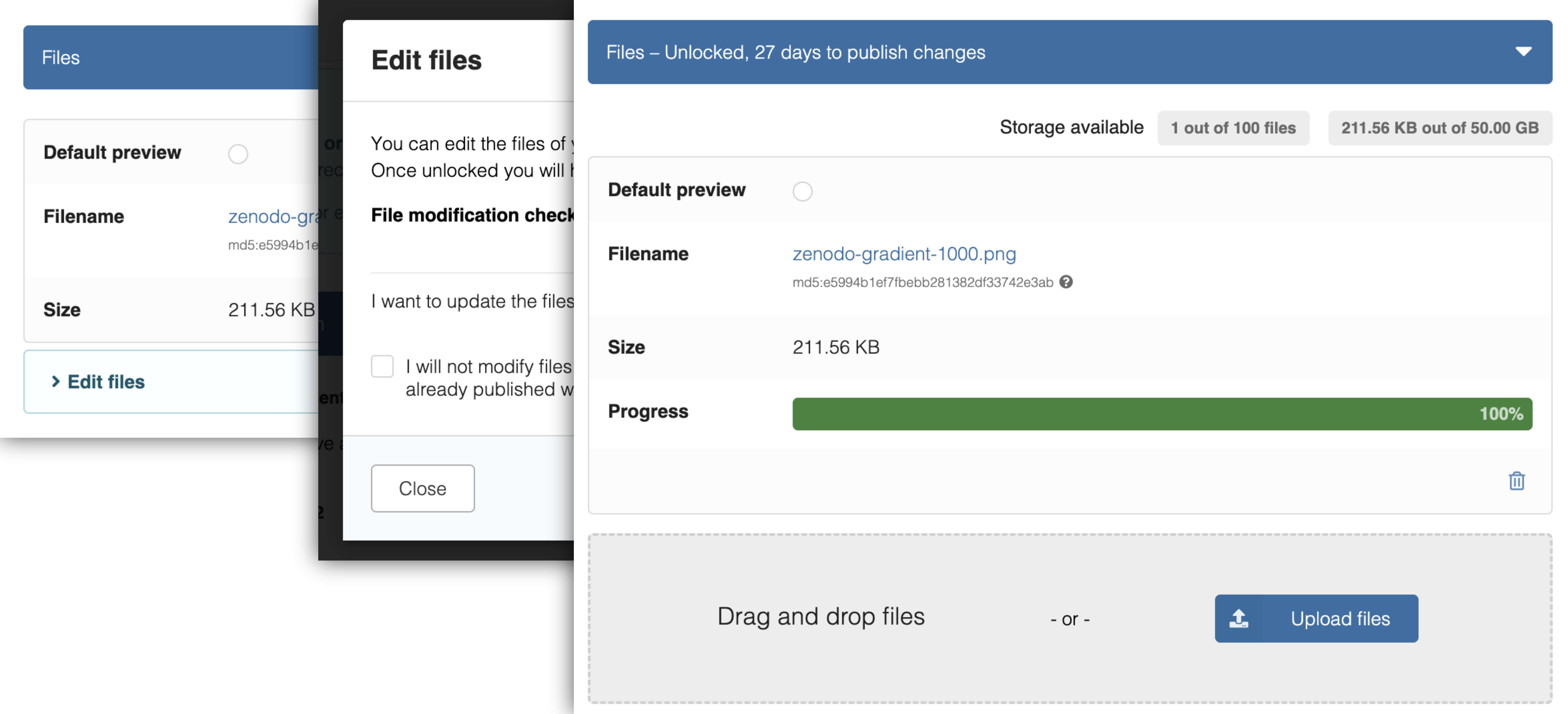
You can now allow users to modify the files of their published records, in accordance with your policies. When enabled, the record's owner can unlock file editing within the first 30 days of publication and modify them within 45 days (by default).
Files quota
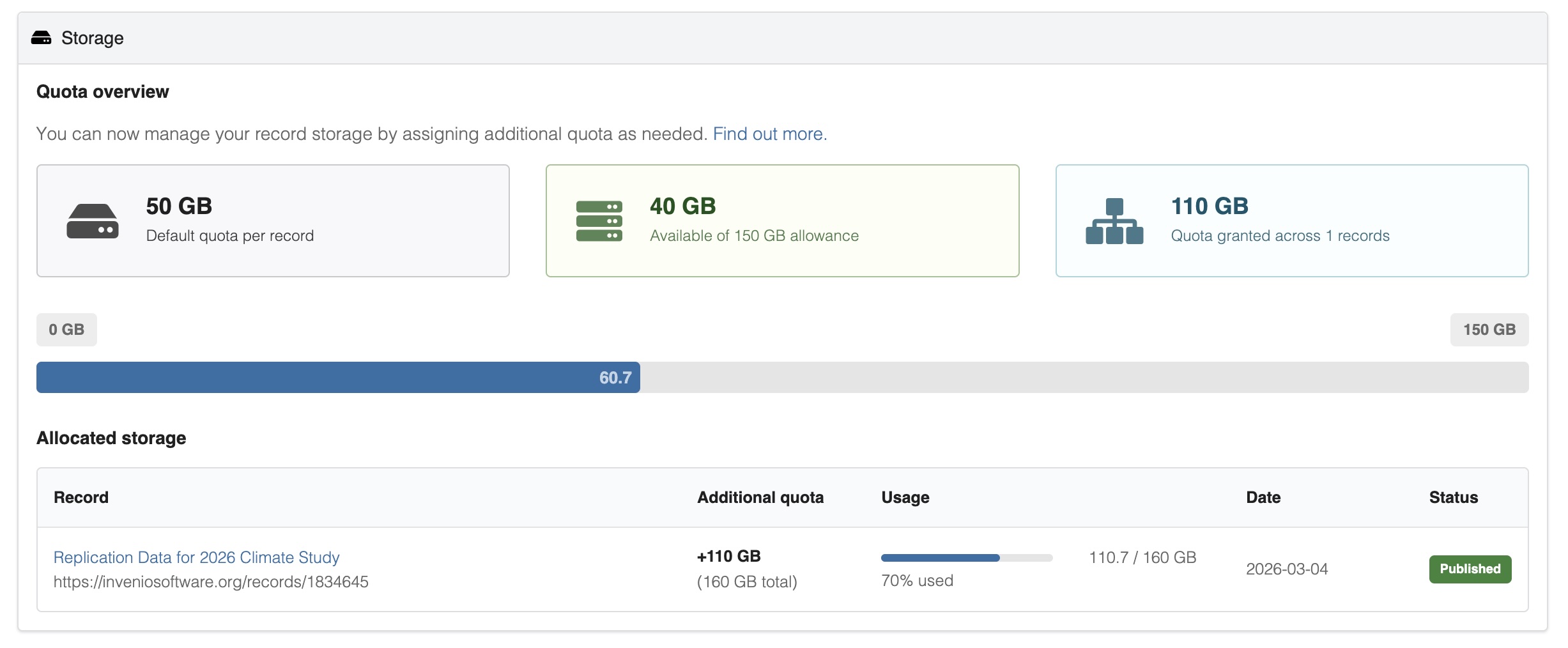
You can specify a default amount of extra storage for files which users can spread across their records, allowing them to selectively use their volume budget for extra large records. Additionally users can view the extra quota which they have used across their records in the new storage page in their settings.
GeoJSON and Web Archive previewers
Preview GeoJSON files uploaded by users directly on an interactive map rendered with Leaflet and OpenStreetMap tiles.
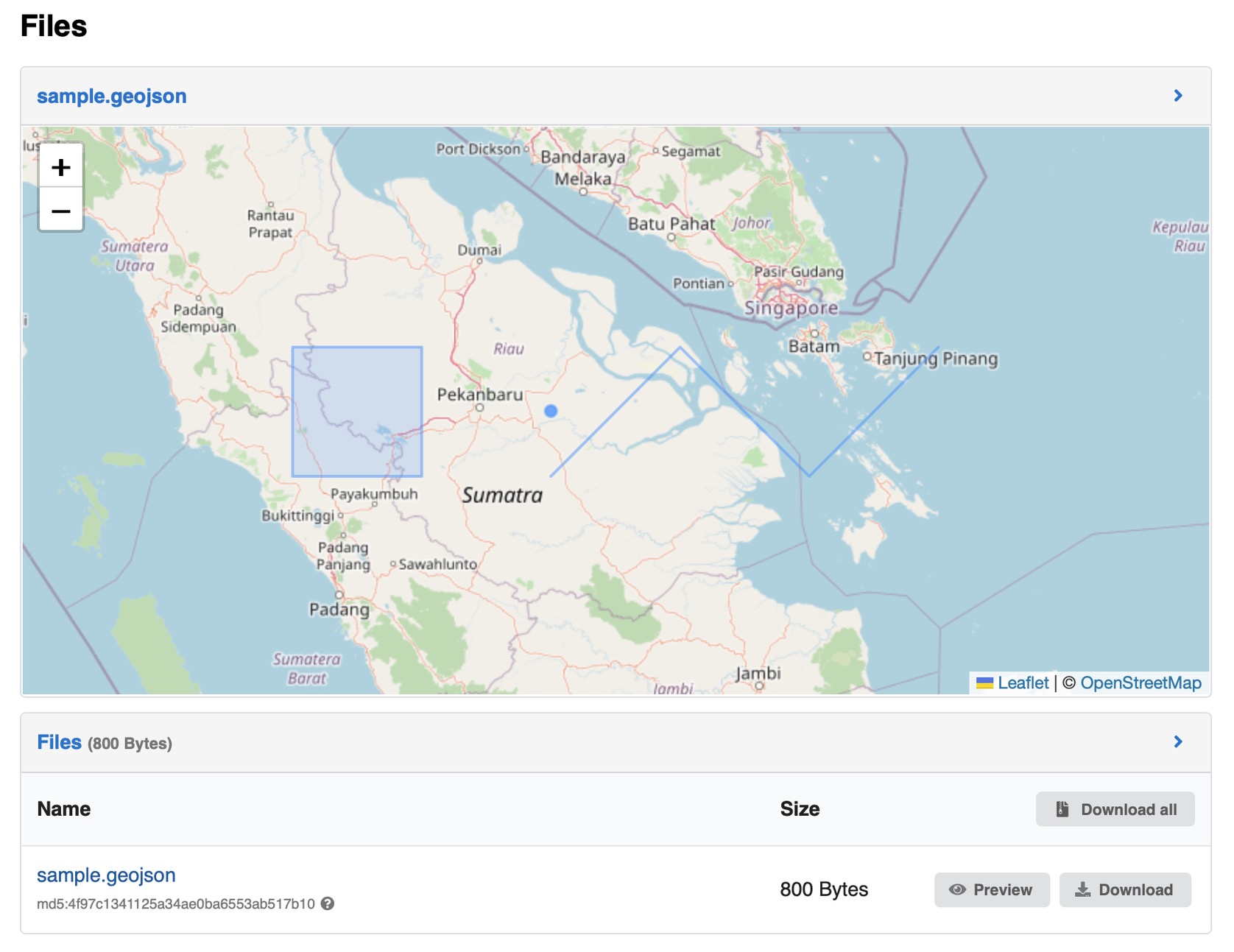
The new previewer automatically detects and displays GeoJSON files as maps within the existing JSON file previewer. When users upload a GeoJSON file, it will be rendered as an interactive map instead of raw JSON.
You can also preview web archives (WACZ, WARC, HAR, CDX, CDXJ) using an embedded ReplayWeb.page viewer.
Job notifications
Jobs can now send email notifications to configured recipients when runs complete with specific statuses. This enables administrators and librarians to be automatically informed about the outcome of scheduled or manually triggered jobs.
Metadata schema update
We have aligned the core metadata schema and vocabularies with the latest additions from DataCite Schemas v4.5, v4.6 and v4.7. The goal is to adopt relevant updates that benefit InvenioRDM instances while strictly limiting breaking changes to ensure a smooth upgrade path. Additional breaking changes will happen in a future release.
List of changes:
- The existing resource types "Publication / Thesis" (id
publication-thesis) and "Publication / Dissertation" (idpublication-dissertation) were merged into the former, which has been mapped to the resource typeDissertationin DataCite. - Added
Poster,Presentation, andStudy Registrationto the depositable default resource types. AddedProjectandInstrumentto the linkable default resource types. - Added
IsTranslationOf,HasTranslation,IsCollectedBy,Collects, andOtherto the default relation types. Added the new contributor typeTranslatorand the new date typeCoverageto their respective default vocabularies. - Added
CSTR(Science and Technology Resource Identifier) andRRID(Research Resource Identifier) as identifiable related identifiers. - When minting DataCite DOIs, renamed the
identifiersfield toalternateIdentifiersand moved thedoiidentifier to its own field.
Modern toolchain
The modern build toolchain introduced as experimental in v13 is now considered stable and ready for adoption:
- uv in place of
pipenvfor Python dependency management. - pnpm in place of
npmfor JavaScript dependency management, with faster installs and a disk-efficient content-addressable store. - Rspack in place of
webpackfor asset bundling, with Rust-based builds that are much faster and drop-in compatible with the existing Invenio asset pipeline.
OAuth improvements
We've added a few small but crucial improvements to our OAuth implementation, improving security and bringing Invenio's third-party authentication in line with modern standards.
- Refresh tokens are now supported, meaning we now have full compatibility with all OAuth 2.0 authorization servers.
- The performance and flexibility of queries have been improved.
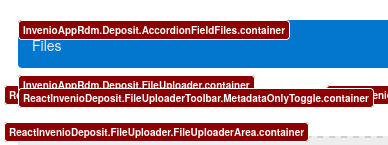
Overridable: easily find components IDs
When customizing InvenioRDM, you often need the UI component ID to override. Developer mode now highlights all overridable components on a page, making it easy to find the ID you need.
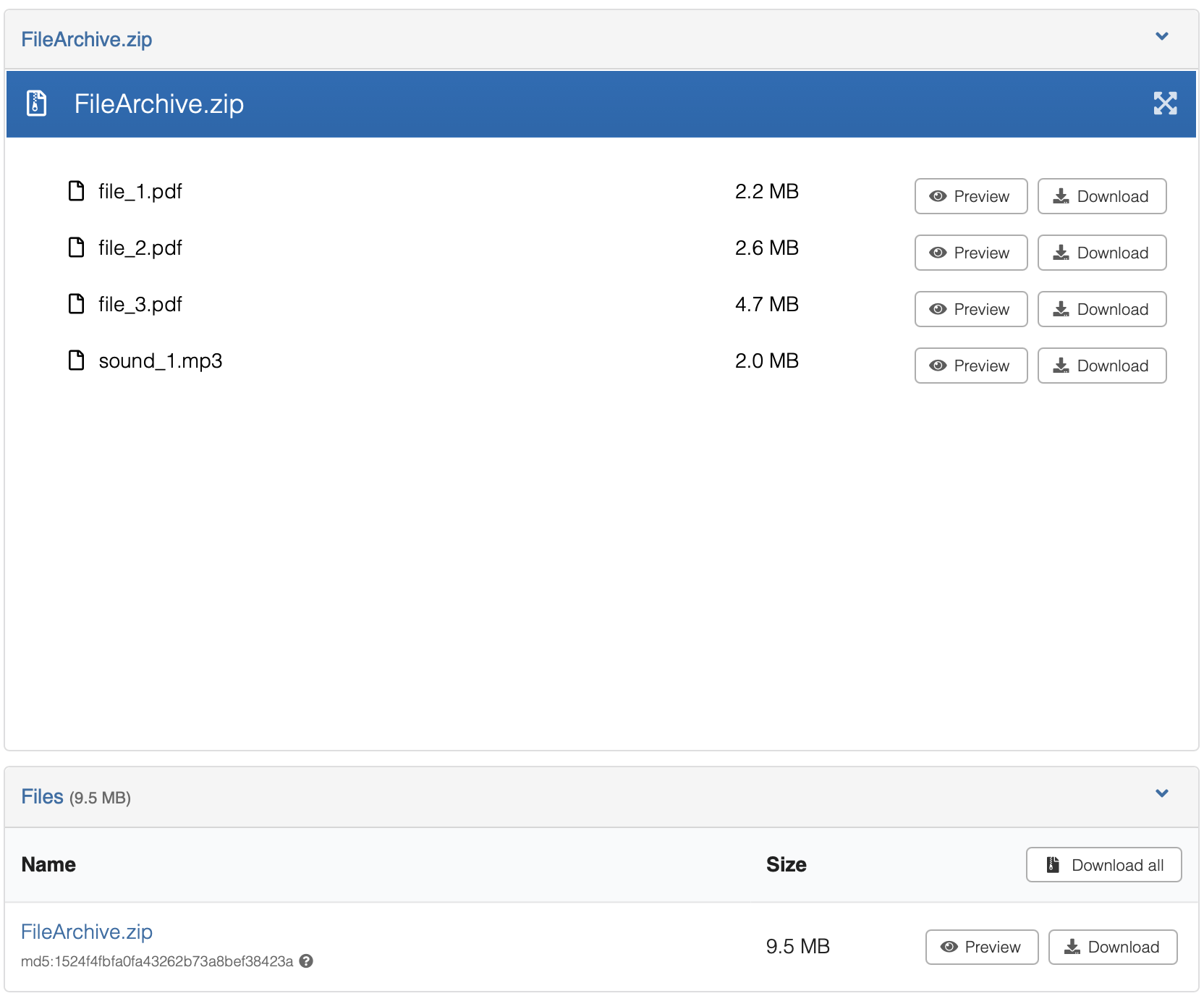
Preview content of ZIP files and others
We've enhanced support for ZIP files and introduced a flexible framework for handling other similar container formats (e.g., NetCDF, TAR). Users can now explore and access files inside archives without downloading them entirely, making large datasets easier to work with.
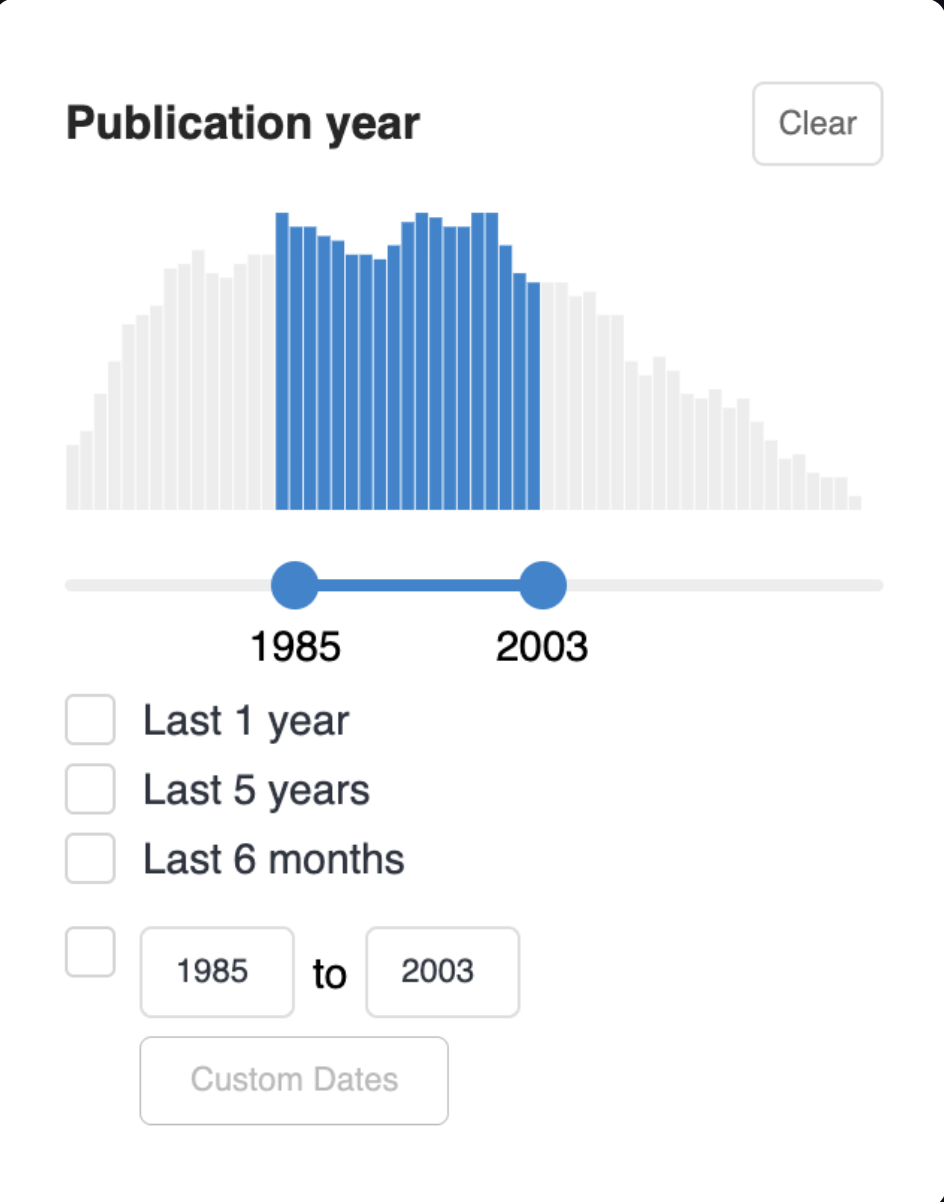
Publication date range facet
InvenioRDM v14 introduces an interactive publication date facet on the search page. Users can filter records by year using a histogram and range slider, or pick from preset ranges (last 6 months, last year, last 5 years) and enter a custom date range.
Record deletion
You can now configure InvenioRDM to allow users to delete, or request deletion of, their own published records in accordance with any policy or criteria you may have. When enabled, the default behavior is that records can be deleted within 30 days of publication. After, the deletion can be requested to the repository's administrators. Deletion requests are visible within the administration panel and the user's request dashboard.
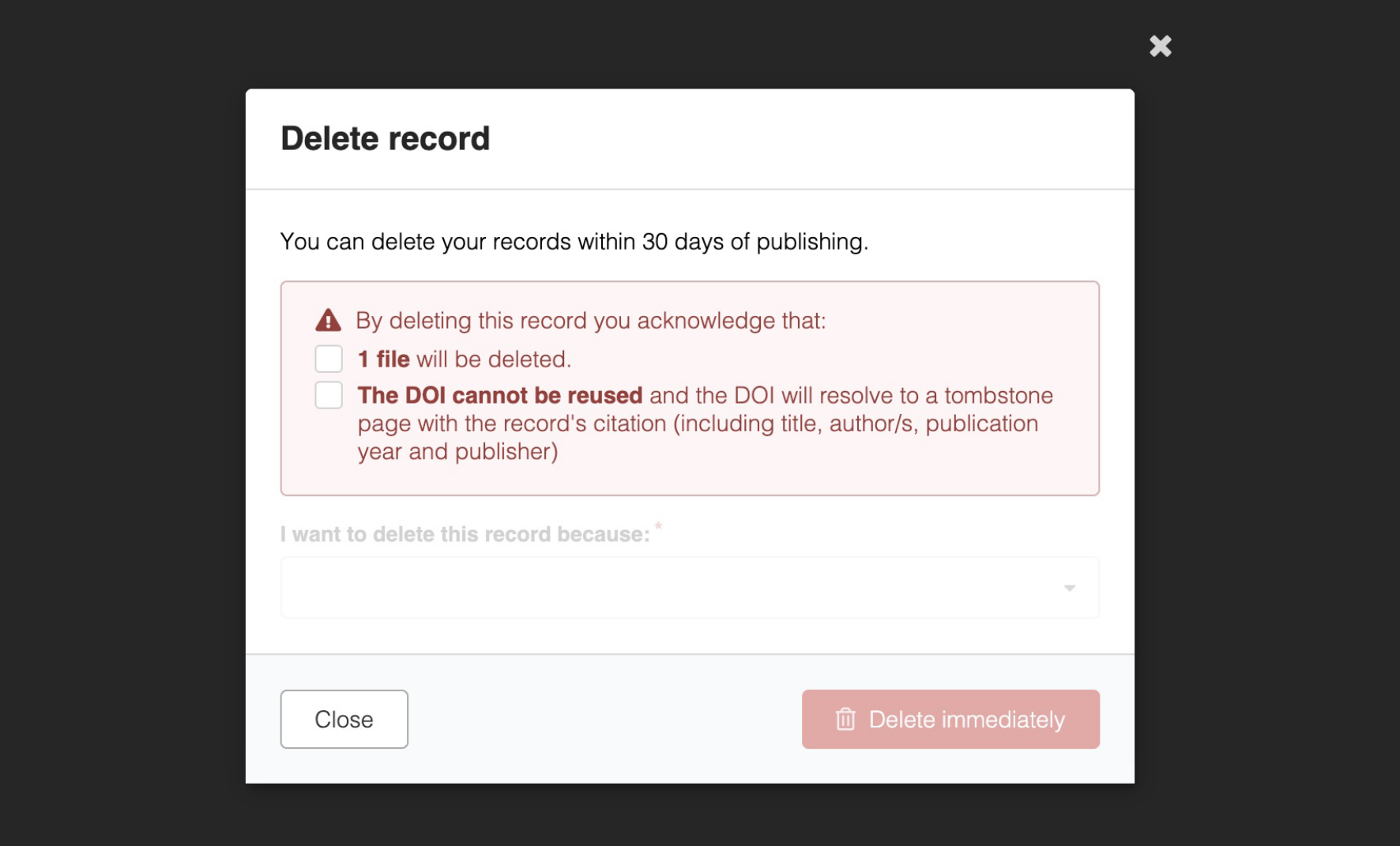
This feature is highly customizable. You can introduce deletion policies based on resource type, community role, file type, or any other criteria you require. Additionally, you can prevent unnecessary record deletion by adding a deletion checklist that suggests how users can resolve the issue correctly instead of deleting the record.
Request commenting enhancements
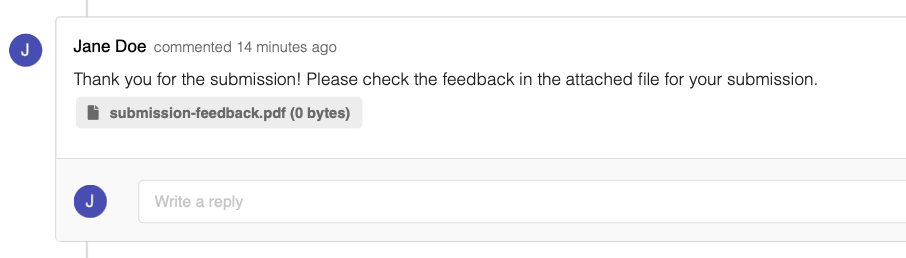
We've introduced a number of exciting new features to improve the commenting experience on requests, which are currently used across InvenioRDM for a range of purposes such as community record submission. You can now:
- share a link to a comment
- insert LaTeX equations in comments
- reply to comments directly
- quote previous comments in full or in part when writing a comment
- lock a request's conversation to prevent further comments at any time
- attach files to a comment
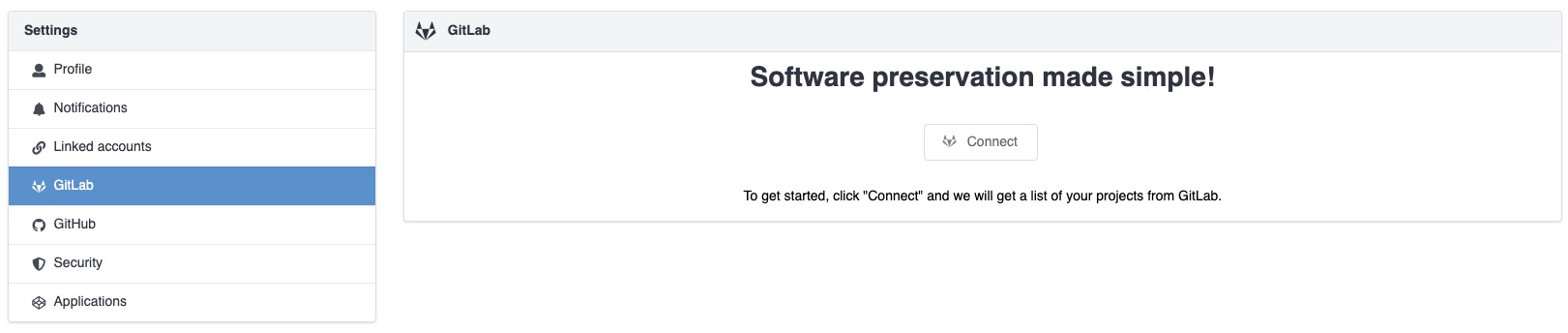
Software archiving (from GitHub, GitLab, etc.)
Software releases can now be archived not only from GitHub, but also from other code forges such as GitLab and GitHub Enterprise.
The new invenio-vcs module replaces the existing invenio-github module with a nearly identical end-user experience while adding support for a generic code forge interface.
... and plenty more
See the full list of all additions.
Breaking changes
Make sure to read the Breaking Changes section in the release notes.
Requirements
InvenioRDM v14 requires:
- Python 3.14
- Node.js 24+
- PostgreSQL 15+
- OpenSearch v2.12+
Questions
If you have questions related to the InvenioRDM v14.0 release, don't hesitate to jump on Discord and ask us!
Credit
The development of this release wouldn't have been possible without the help of these smart people (name or GitHub handle, alphabetically sorted):
- Alex Ioannidis
- Alžběta Pokorná
- Anika Churilova
- Brian Kelly
- Carlin MacKenzie
- Chokri Ben Romdhane
- Chris Wagner
- Christoph Ladurner
- Dan Granville
- ducica
- Dusan Stojanovic
- enitu
- Eric Newman
- Esteban J. G. Gabancho
- Fatimah Zulfiqar
- Guillaume Viger
- Hrafn Malmquist
- Ian Scott
- Jacob Collins
- Jakob Miesner
- Javier Romero Castro
- Jorge Marco
- Julie Hinge
- Karl Krägelin
- Karolina Przerwa
- Lars Holm Nielsen
- Laura
- Maira Salazar
- Markus Klöpper
- Martin Fenner
- Maximilian Moser
- Miroslav Bauer
- Miroslav Simek
- Nicola Tarocco
- Oliver Geneser
- Ondřej Ruml
- Orkun BALCI
- Pablo Saiz
- Pablo Tamarit
- Pal Kerecsenyi
- Pascal Repond
- Peter Desmet
- Peter Weber
- Rafael Martínez-Estévez
- Rishabh Oberoi
- ron
- Saksham
- Sam Arbid
- Sarah Wiechers
- senyaaa
- Simone Tripodi
- sushmithainjeti
- Taha Khan
- Till Korten
- Tom Morrell
- Uma Ganapathy
- Werner Greßhoff
- yashlamba
- Zacharias Zacharodimos
- Zübeyde Civelek
Conference Spotlight: InvenioRDM Workshop Day at Open Repositories 2026

The 21st annual Open Repositories conference took place virtually on June 8 - 11, 2026. The first virtual conference since 2021, the dozens of presentations and posters featured presenters from around the world, all sharing innovations related to the conference theme: Open to All? Repositories at the Intersection of People, Practice, and Emerging Technologies.
As an added bonus, all presentations except the Roundtables were recorded, and are now available, along with all other conference materials, through Open Repositories' Zenodo community. This includes the InvenioRDM Workshop, one of five half-day workshops offered.
At our fifth annual OR InvenioRDM Workshop, a dozen of our community members collaborated to present on the most recent features and cutting-edge customizations of InvenioRDM. Show-and-tells and demos were presented in the first half. After a short break, we offered participants choices of three breakout rooms, enabling them to ask the experts questions in three key areas: technical installation and support; user support and promotion of an InvenioRDM-based institutional repository; and the activities of, and how to become involved with, the InvenioRDM Community.
Our expert-led Show-and-tells and demos, and supporting slides, included:
- CERN's most up-to-date product updates (including information on v14)
- TU Wien's customizations and enhanced features on their instance, TU Wien Research Data
- Paradigm's outline of a bulk import / export tool for use with InvenioRDM instances
- NYU's description of a migration project to bring geospatial data into a local InvenioRDM instance
- Northwestern University's explorations into a metadata-assisted repository service model for deposits into Prism, the local instance of InvenioRDM
- Caltech's presentation on their Library's three InvenioRDM-based institutional repositories: Caltech Authors, Caltech Research Data Repository, and Caltech Thesis
- An InvenioRDM Technical FAQ prepared by developers from Northwestern University
- A summary of the work and functions of the InvenioRDM open source community, prepared by Northwestern and NYU
Thirteen of our fifty participants completed a post-survey, revealing their differing roles, including Librarians (38%), Developers (23%), Managers (15%), Other (15%), and IT/System Administrators (8%). Most (85%) had never attended an InvenioRDM workshop before, and most (nearly 70%) were at least somewhat familiar with the software. 46% did not have an InvenioRDM instance, while 23% did, and 31% were considering setting one up. Satisfaction levels were high, with expectations generally being met and a high likelihood of recommending a future InvenioRDM workshop like this one to a colleague. The examples and practical applications we demonstrated were considered relevant, awareness of the software was increased, and people affirmed that they were highly likely to use knowledge, skills, and resources from the workshop in their work settings. A slightly lower score was obtained for the statement, "I got all the information about InvenioRDM that I need to implement for my institution", however no specific requests or feedback were provided as to what types of information would be most useful to address this in the future.
InvenioRDM made an appearance in several other sessions apart from the Workshop, including:
- The Repository Showdown: Nicola Tarocco on behalf of Zenodo
- Ask a Robot - Adding AI Search to InvenioRDM by Steven Eardley of Cottage Labs
- University of Edinburgh Streamlined Research Data Service Feasibility Study by Robin Rice and Ianthe Sutherland
- Public Health Data in Context: Publishing the RKI Research Graph by Luca Leipold, Franziska Diehr, Nicholas Drebenstedt (Robert Koch Institute), Richard Jones (Cottage Labs)
- Institutional repository service design at NYU Libraries by Laura Henze, Jonathan Greenberg, and Deb Verhoff of NYU
- When "Open to All" Threatens Sustainability: AI, Bots, and the Future of Open Repositories by Aaron McCollough (Paradigm), Tom Morrell (Caltech), Mirek Simek (CESNET), and Alex Ioannidis (CERN)
- Presenting Metadata Differently by Aga Domanska (Cottage Labs), Franziska Diehr (Robert Koch Institute), and Richard Jones (Cottage Labs)
At the end of the conference, it was announced that the next Open Repositories will be hosted in Salvador, Brazil from June 6 - 10, 2027. We will aim to host an InvenioRDM workshop once again then, and we hope to see you there!
References
- Tarocco, N., Ioannidis, A., & Gonzales, S. (2026). InvenioRDM OR2026 Workshop Kick-off. https://doi.org/10.5281/zenodo.20445471
- Moser, M. (2026). TU Wien Research Data: InvenioRDM Customized & Certified. https://doi.org/10.5281/zenodo.21248860
- McCollough, A. (2026). Paradigm’s Bulk Import / Export Tool for InvenioRDM. https://doi.org/10.5281/zenodo.21249140
- Verhoff, D., & Pechekhonova, E. (2026). Migration from a Spatial Data Repository to InvenioRDM. https://doi.org/10.5281/zenodo.20734133
- Gutzman, K., & Elder, J. (2026). Beyond Manual Deposit: Exploring a Metadata-Assisted Repository Service Model. https://doi.org/10.5281/zenodo.21249205
- Morrell, T. E. (2026). Caltech Library Repositories. https://doi.org/10.5281/zenodo.21249014
- Viger, G., Sharp, A., & Newman, E. (2026). InvenioRDM Technical FAQ - A Remixed Addendum. https://doi.org/10.5281/zenodo.21247805
- Gonzales, S., & Verhoff, D. (2026). The InvenioRDM Community 2026. https://doi.org/10.5281/zenodo.20633150
- Tarocco, N., Ioannidis, A., & Gonzales, S. (2026). InvenioRDM repository showdown. https://doi.org/10.5281/zenodo.20789135
- Eardley, S. (2026). Ask a robot—Adding AI search to InvenioRDM. https://doi.org/10.5281/zenodo.20789098
- Rice, R., & Sutherland, I. (2026). University of Edinburgh Streamlined Research Data Service Feasibility Study. https://doi.org/10.5281/zenodo.20789021
- Leipold, L., Diehr, F., Drebenstedt, N., & Jones, R. (2026). Public Health Data in Context: Publishing the RKI research graph. https://doi.org/10.5281/zenodo.20788963
- Henze, L., Greenberg, J., & Verhoff, D. (2026). Institutional repository service design at NYU Libraries. https://doi.org/10.5281/zenodo.20789011
- McCollough, A., Morrell, T., Simek, M., & Ioannidis, A. (2026). When “Open to All” Threatens Sustainability: AI, Bots, and the Future of Open Repositories. https://doi.org/10.5281/zenodo.20788969
- Domanska Aga, Diehr Franziska, & Jones Richard. (2026). Presentations: Presenting Metadata Differently. https://doi.org/10.5281/zenodo.20778609
InvenioRDM Deposit Form Extension
Extending the InvenioRDM Deposit Form
When I first started work on Knowledge Commons Works, one of the first things I built was an extension to add several layers of functionality to the stock InvenioRDM deposit form: invenio-modular-deposit-form. Three years later, that extension has matured and been rewritten from the ground up to be re-usable by other InvenioRDM instances.
Born from our UX research
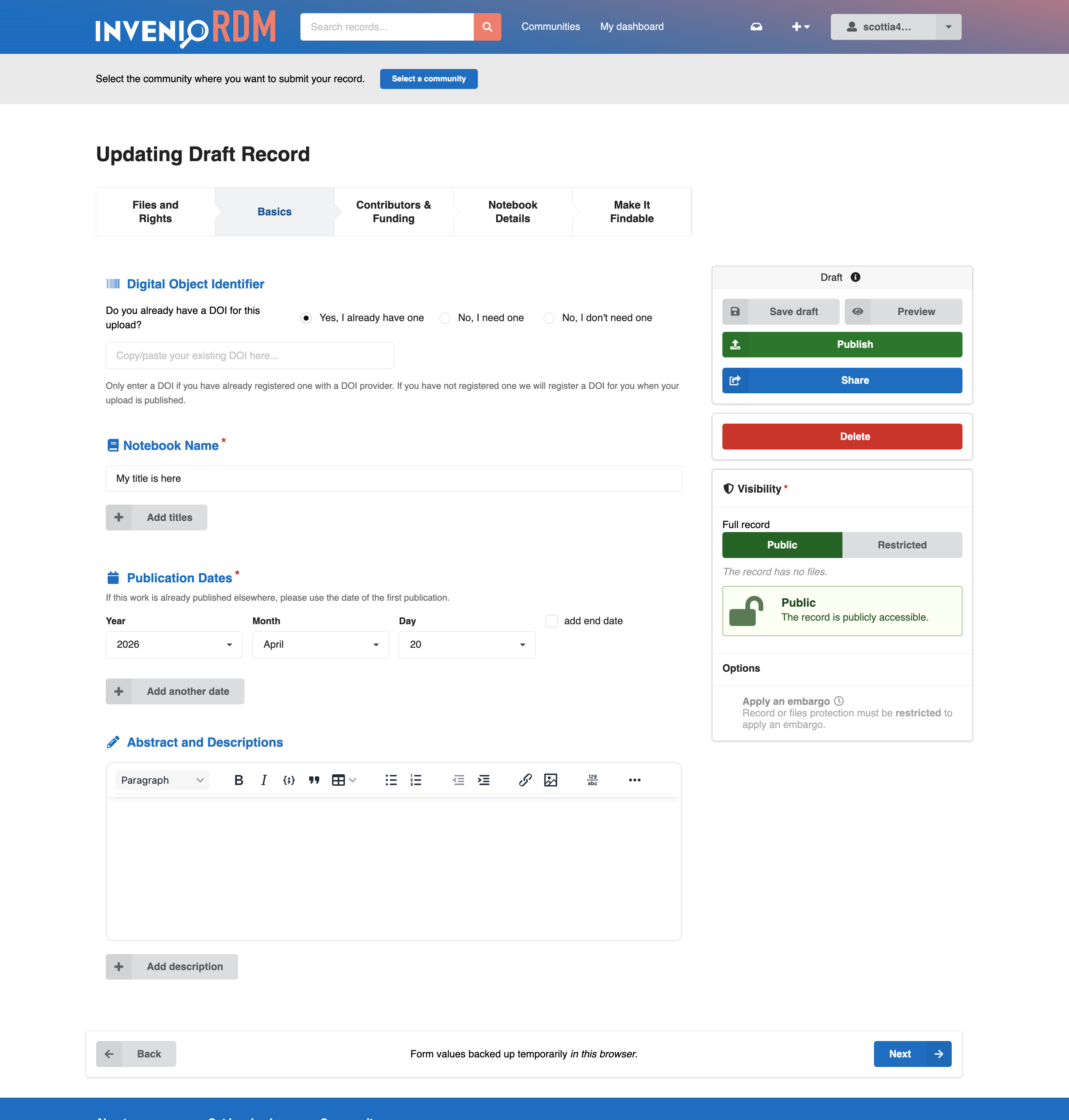
Early on I was handed the challenge of adding several things to the stock InvenioRDM upload form. Our team had been doing UX research with our user base, and had come up with some recommendations. The stock form was a bit overwhelming for users. They wanted a stepped form that let them deal with just one section at a time. They wanted a form that adapted to the resource type they were uploading. It should be smart enough to recognize that I don't need to see the "Journal Title" field if I'm uploading a dataset. They got frustrated when they refreshed their browser, or closed the tab, and lost all of the values they'd been entering. And they didn't want to wait until they submitted the form to find out they'd missed a required field or that their publication date wasn't formatted properly. They wanted immediate feedback. Finally, they wanted the fields to be grouped differently than the stock form arrangement, and that included bringing "custom" fields from the bottom of the form into the main form sections. Along the way, we rearranged the form fields several times, convincing me that I needed to be able to change the form's layout without rewriting templates every time.
And so the invenio-modular-deposit-form was born. The first version was not a very elegant beast and it was also very tightly coupled to our own InvenioRDM instance. As I learned more about InvenioRDM's internals, I also heard other developers talk about needing similar features. So when I had the chance to revisit our deposit form, as part of our upgrade to InvenioRDM v13, I took the opportunity to rewrite invenio-modular-deposit-form as a cleaner and fully generic extension.
Now we're finally ready to share the extension and see whether it can be useful to others.
Five layers of added functionality
Fully configurable layout
Form layout with the extension is driven entirely by a configuration object. So it's quick and easy to move fields around in the form, and swap out different field components, without touching any React code. Layout is configured declaratively, using a Python dictionary that describes a tree of React component names. At the top of this component object we name six basic form regions (title, form header, centre column, sidebars, and form footer). Inside each of these regions we can place structural components (like form rows, or form sections). Then individual field components can be nested as desired in those structural elements.
While the form layout dictionary has a simple structure, it also allows great flexibility because it can pass any desired class names and other props through to the React components themselves. This allows for, e.g., using responsive css classes to add responsive behaviour to any component. It also provides one central place for defining (or overriding) things like field labels, descriptions, etc.
Custom fields anywhere
Custom field inputs can be placed anywhere in this layout configuration, mixed as desired with the rest of the stock InvenioRDM fields. This is made possible by a CustomField wrapper component that reads the standard custom fields UI configuration.
Stepped form progression
The form fields in the centre column can be divided into a set of form pages, allowing users to interact with the form as a series of manageable steps. The extension also provides two different navigation components: a button-based stepper component that fits at the top of the form, or a vertical menu that can be displayed in either sidebar.
Just as the form sections, fields, and regions can be made responsive via classes, whole form pages can be set to display only at certain display dimensions. For example, the form submission buttons could be displayed in a sidebar on wider devices and then moved into a separate page of the form on smaller screens.
Extensible component registry
Behind the scenes, this layout is driven by a FormLayoutContainer component that is responsible for reading the configuration at runtime and arranging the form fields. The registry of available form components can be extended via an entry point, allowing instance maintainers to use their own React components--either for custom fields or simply to add alternate components for existing fields.
Adaptation to resource type
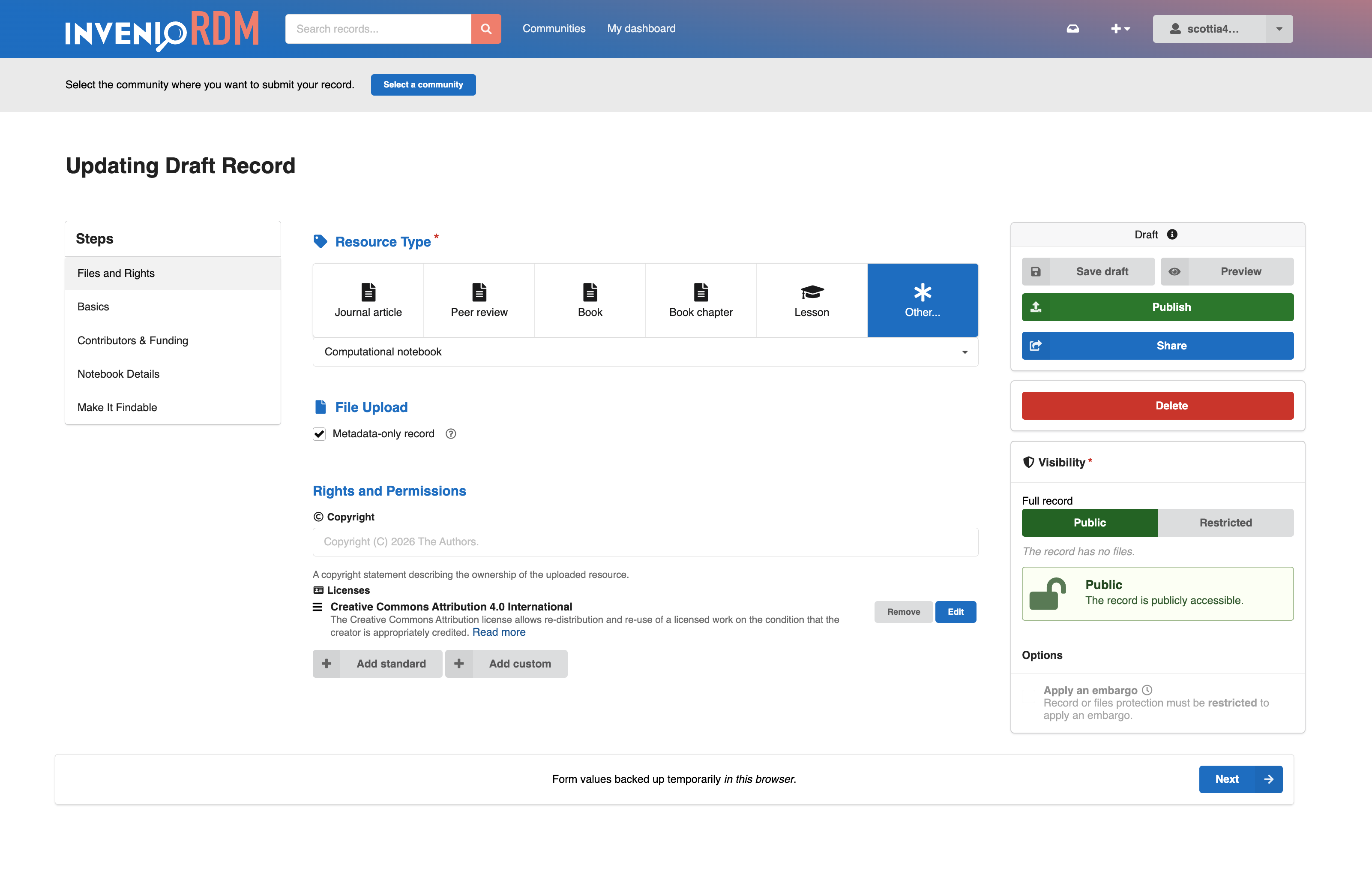
The form layout can also adapt to whatever resource type is currently selected. Alongside the main form layout configuration object, a second dictionary can be used to define layout overrides for any resource type. Fields can be rearranged, shown, or hidden instantly when the resource type is changed. And props in these override configurations can be used to adapt field properties to the selected resource type, so that the field label, default values, description, etc. remain relevant to the kind of material being deposited.
Client-side validation
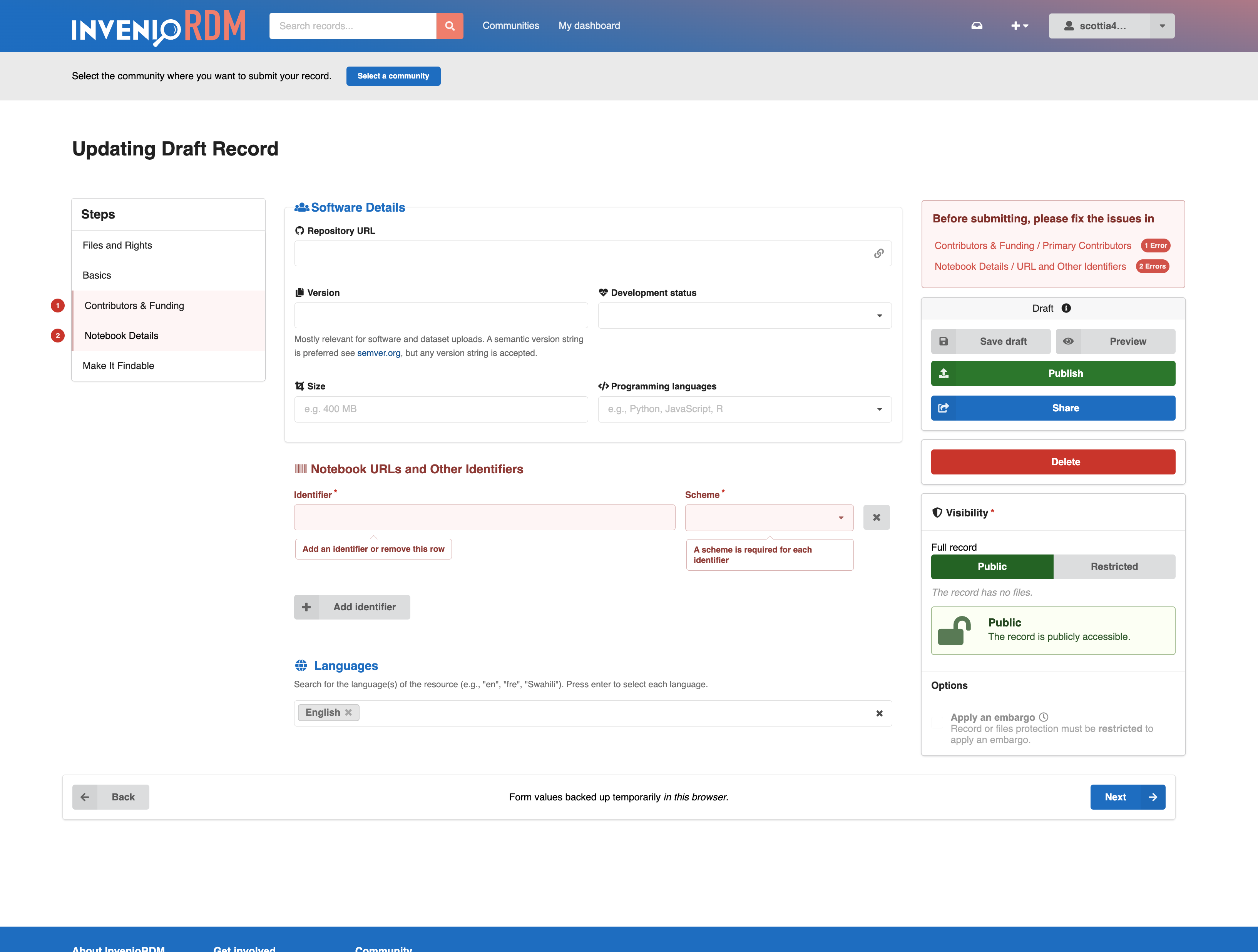
The invenio-modular-deposit-form extension also adds immediate client-side validation of the form fields, letting users see immediate warnings if there are problems with a value they've entered. Error tooltips are displayed in-place above the affected fields, and error labels are shown on the stepper or menu components for any pages that have errors. A separate FormFeedback component can display a summary of form error messages in any region of the form layout.
This validation is driven by a Yup validation schema that duplicates as closely as possible the validation that InvenioRDM performs on the back end when a draft is submitted. This schema can also be customized or extended as desired.
Autosave and restore
In addition to the configurable layout and client-side validation, the extension also adds autosave and restore to the form. As the user types, the form's current values are stored in their browser's local storage. If the user leaves the page before saving a draft to the back end, when they return to the form they are prompted to either restore these locally backed-up values or discard them and start fresh. Separate backups are stored for each draft id and each user working in the same browser, so that unsaved values aren't lost if a user switches from one active draft to another.
Form pre-submission transformations
Finally, the invenio-modular-deposit-form extension provides an extensible hook to modify any of the form values when the user clicks "save draft" or "publish". No transformations are included by default. But instance maintainers can use a final entry point to supply functions that modify any of the field values on form submission. So one might, for example, catch records that do not include a "publisher" value, and add a different default depending on the resource type, the selected community, or even the institutional affiliation of the record's creators.
Bonuses
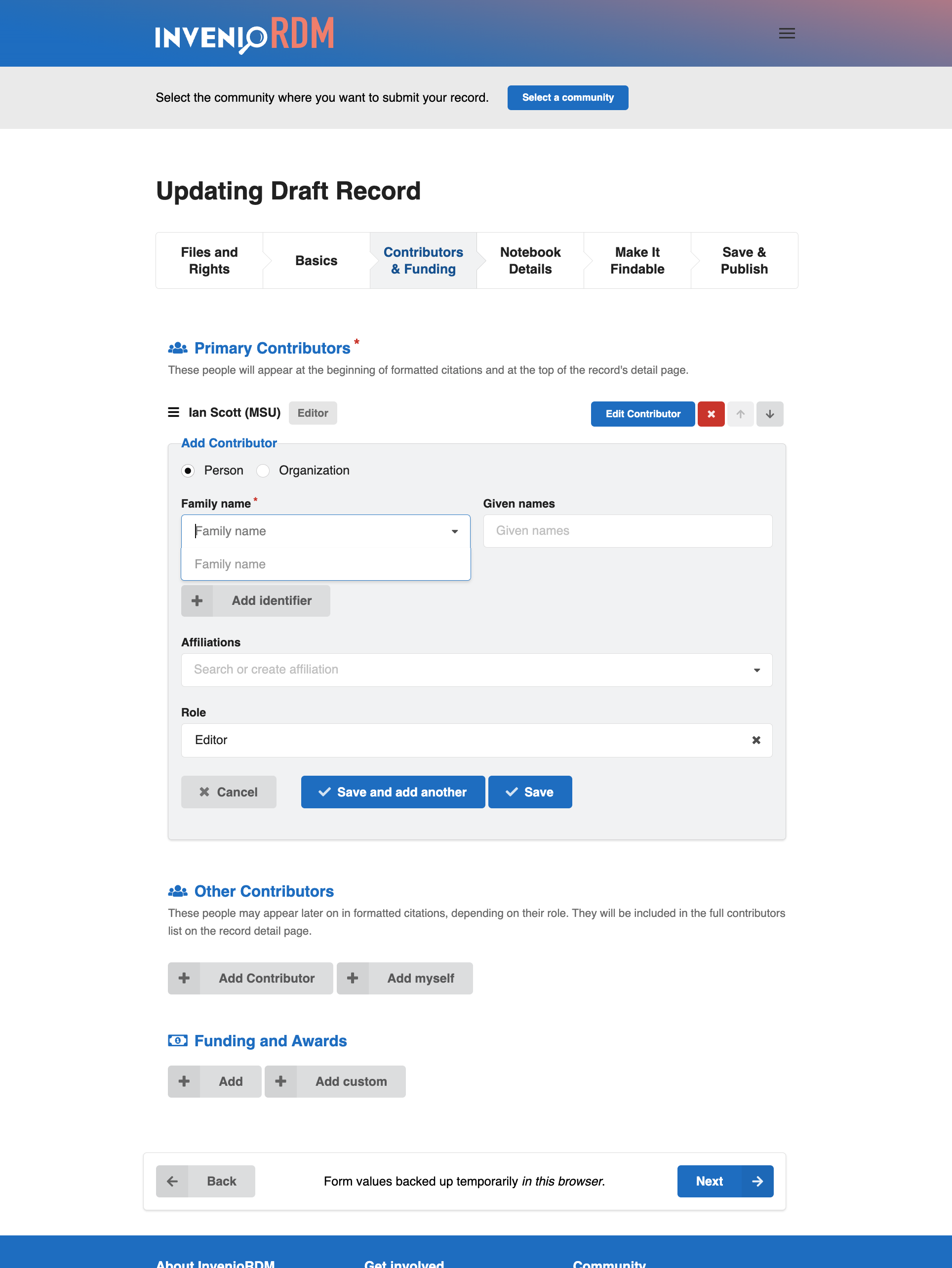
Along the way, we've also developed alternate versions of some form fields that are included with the extension. These include a Creator/Contributor field that uses collapsible inline fields (instead of a modal) and an alternate publication date field that provides separate year, month, and day selectors, ensuring that entered dates are formatted as proper EDTF strings. These are included, in part, in the hope that others might also share their own alternate components.
How does all of this get added?
My basic approach in writing invenio-modular-deposit-form has been to modify the stock form as little as possible. Most of the added functionality comes from (a) a custom deposit form template, and (b) two React components that live between the stock form's API/Formik bootstrapping layer and the actual form fields: FormUIStateManager for keeping track of the form's dynamic state, and FormLayoutContainer for setting up the configurable layout. This is complemented by structural components for various form regions and layout sections (FormSection, FormRow), as well as by wrapper components that feed the individual fields with the props and configuration values they need (FieldComponentWrapper, CustomField).
The ideal goal is to make this layer work with the stock InvenioRDM form field components as is. We're not quite there yet. The invenio-modular-deposit-form currently comes bundled with forked versions of many components, since slight changes were necessary to get aspects of the client-side validation and per-type adaptation working. The hope is that I'll be able to upstream enough of these changes to drop most of these forks.
An example of the possibilities
Our invenio-modular-deposit-form extension doesn't aim to be the perfect deposit form. Our goal has, instead, been to make the stock InvenioRDM form as flexible as possible, to extend its functionality to meet an even wider variety of needs. Many of us who develop and maintain InvenioRDM instances have made the deposit form our own. I hope our work provides one example of how we might make these kinds of customizations easier to implement and maintain for all of us.
You can find the Knowledge Commons Works instance of InvenioRDM at https://works.hcommons.org and the invenio-modular-deposit-form extension on Github at https://github.com/MESH-Research/invenio-modular-deposit-form.
datastore: Relaunch of our research data repository
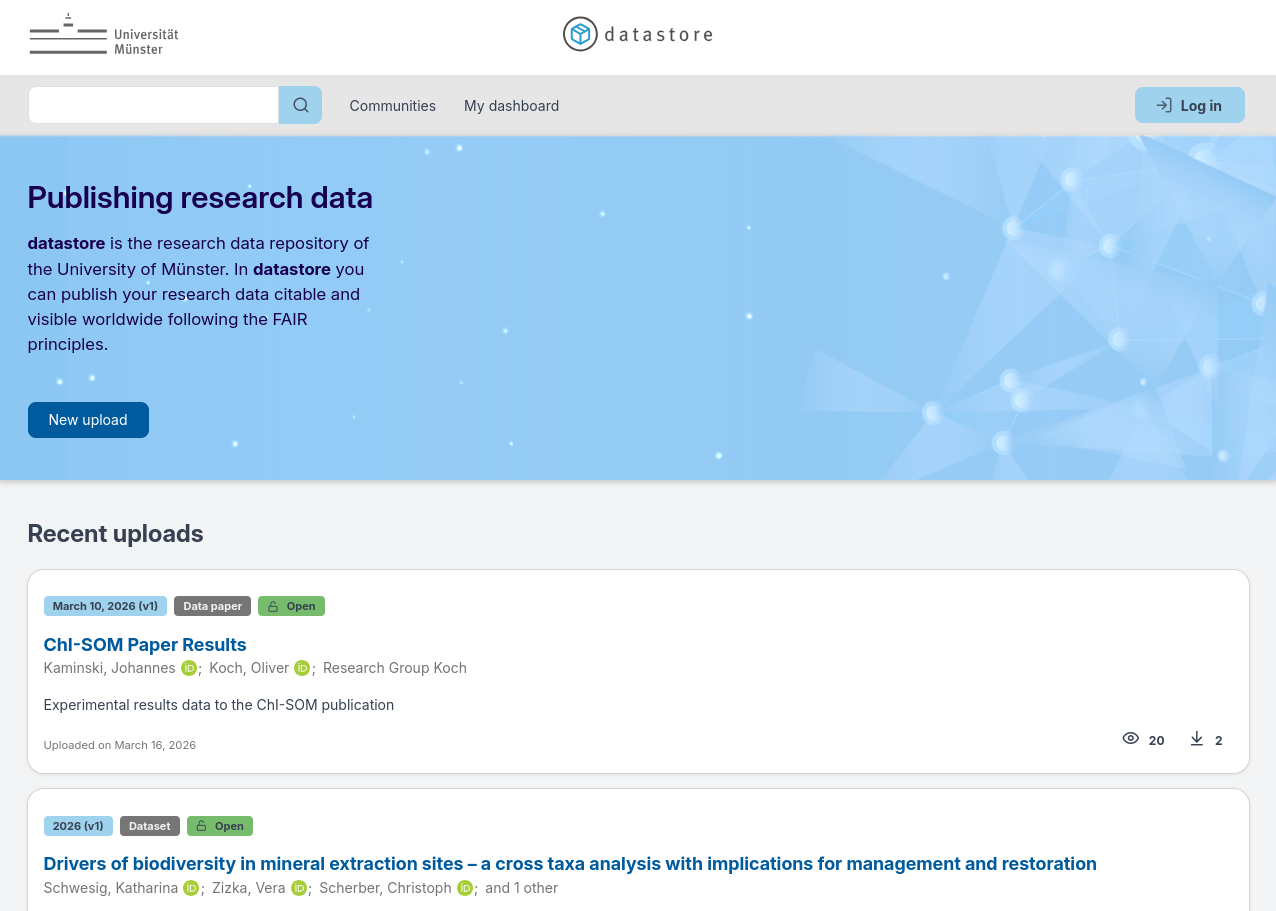
We’ve recently completed a major overhaul of datastore, the research data repository of the University of Münster. The service has been fully rebuilt and is now running on InvenioRDM v14.0.0b4.
This relaunch also marks a major technology shift: the previous datastore service was based on a Java/React stack. Moving to InvenioRDM helps us ensure sustainable maintenance and long-term future viability by building on a shared, actively developed codebase.
datastore is available at: https://datastore.uni-muenster.de/
What’s improved
The new system brings major improvements, both functionally and in terms of usability:
- Publish datasets up to 5 TB
Records can now include datasets up to 5 terabytes, better supporting data-intensive projects. - Modern, streamlined UI
A clearer interface and updated design make creating and publishing records easier. - Improved deposit guidance
More structured submission steps support more consistent documentation. - Standardized metadata
Richer, more consistent metadata improves discoverability and supports long-term reuse.
CRIS-assisted metadata entry (local integration)
To reduce manual entry and improve metadata quality, we implemented a local integration with the University of Münster’s Current Research Information System (CRIS). During deposit, users can retrieve project-related metadata from CRIS and use it as a basis for describing their dataset.
Curation workflow with invenio-curations
All submissions are curated by the University and State Library (ULB) and the Service Center for Data Management. We use the invenio-curations module developed in collaboration by TU Graz and TU Wien to ensure compliance with our metadata requirements and repository standards, improving the quality and reusability of published datasets.
We also extended the module with additional features, e.g. ensuring that records remain locked for editing while they are in curation, which helps avoid conflicting changes and keeps the review process consistent.
Access and availability
Deposits are available to University of Münster members. Published records can generally be viewed openly, depending on the access settings chosen for a dataset. The interface is currently English-only; a fully translated German UI is planned for May using the InvenioRDM translation workflow improved by the new translation bundle feature from TU Graz.
For those interested in learning more about our implementation, you can contact our team at forschungsdaten@uni-muenster.de.
Whoops! The Better-Late-Than-Never March 2025 InvenioRDM Partner Meeting Summary
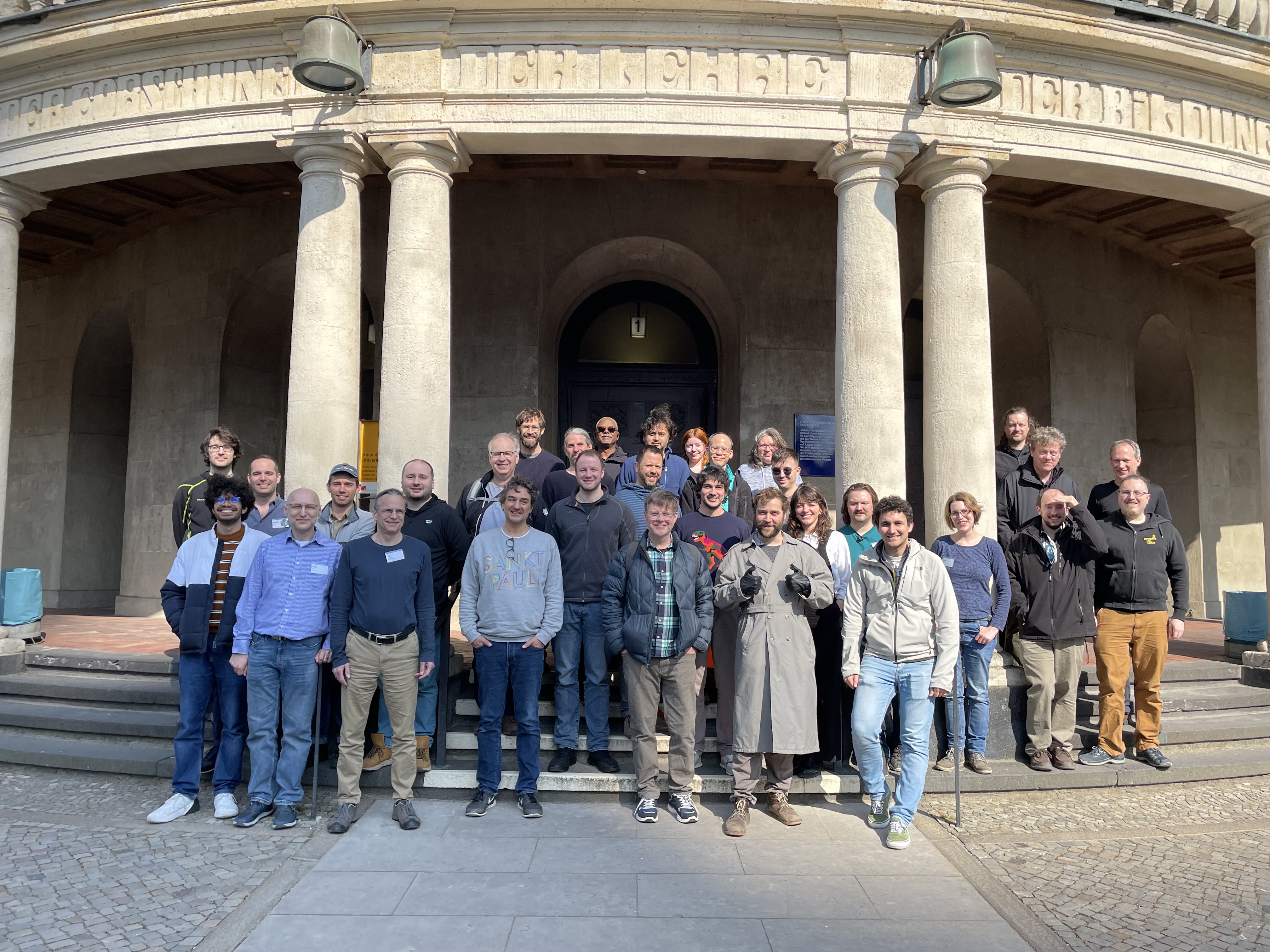
As the InvenioRDM partners were making their way back home from 2026's annual partner meeting, we suddenly realized we had not published a blog post summarizing 2025's partner meeting. Whoops! Turns out, we were so busy building and improving InvenioRDM for you that it completely slipped our minds. Before we catch you all up on the most recent meeting, here is a summary of the great things that the InvenioRDM partners accomplished in 2025.
Meeting highlights
Kai Wörner, Deputy Head of the Center for Sustainable Research Data Management at Universität Hamburg, and his team, hosted the InvenioRDM community for five days from March 24 - 28, 2025. In addition to the local team's hospitality, participants experienced the university's cutting-edge research and the city's rich maritime heritage, cultural diversity, and the enchanting Miniatur Wunderland. Meanwhile remote participants enjoyed a seamless experience through a Zoom/Owl setup provided and maintained by Steve Diggs, an InvenioRDM collaborator currently with the Scripps Institution of Oceanography.

Instance rodeo & Open space technology
The first day was devoted to an "InvenioRDM-Instance-Rodeo," in which maintainers of local instances showcased their implementations, sharing their local innovations and customizations.
Next, utilizing proven methodology, Open space technology was used to enable participants to propose and vote upon topics for discussion. The topics included:
- Glacier/cold storage handling
- Full-text search
- Automated metadata extraction from files
- User experience on the deposit form
- EduGAIN interfederation
- Accessibility issues
- Self-contained HTML reports
- RO Crate previews
- Invenio-stats
- Translations
- Thesis Fields
- Scope of the Partner Meeting and Community topics
- Maintainers playbook
Tangible outcomes
A few of these topics have had concrete effects visible today, including:
- The deposit form now offers enhanced customizability, allowing users to hide or show fields, reorder components, and easily locate elements for override.
- Available metadata fields have been expanded to include new optional fields, such as thesis, improving content description and FAIR compliance.
- Joining the maintainers team is now more accessible with the introduction of the new Maintainers Handbook.
- Partner Meeting structure decision: maintain the first two days for presentations and general information so those considering the software can attend just the first 1-2 days for a general overview.
Thanks
Many instance presentations from the Rodeo can be viewed in the InvenioRDM Partners Workshop 2025 Zenodo community. Many thanks to the local hosts at Universität Hamburg for their hard work and hospitality, and thanks also to Steve Diggs!
Repositories and libraries: Invenio features InvenioILS!
For years, the Invenio community has been known for powerful open-source repository solutions - especially InvenioRDM. But many institutions need more than a repository: they need a modern, flexible platform that also supports collections, loans, acquisitions, and patron services.
InvenioILS brings these capabilities into the Invenio family, offering a fully open, customizable Integrated Library System built on the same modular framework as InvenioRDM.
A modern, feature-rich ILS (Integrated Library System)
InvenioILS delivers the essential tools libraries rely on:
- Circulation & patron services: loans, renewals, requests, notifications, and configurable policies.
- Cataloguing & metadata: flexible JSONSchema-based records, holdings, items, and fast discovery powered by Elasticsearch/OpenSearch.
- Acquisitions & ILL: vendor management, orders, budgets, document delivery, and interlibrary loan workflows.
- Clean, responsive UI: a modern interface designed for both librarians and patrons.
Flexible and extensible by design
InvenioILS is highly modular and, like InvenioRDM, based on Invenio Framework. It becomes easier to share the expertise between these two products. Institutions can customize metadata, circulation rules, UI components, and system behaviour - or integrate with external services through the REST API. This flexibility allows libraries to adopt InvenioILS “as is” or tailor it into a specialized solution that fits their workflows and identity.
CERN: A Showcase Installation
An example of an advance deployment of InvenioILS is at CERN - CERN Library Catalogue, where the platform powers daily library operations and serves thousands of users.
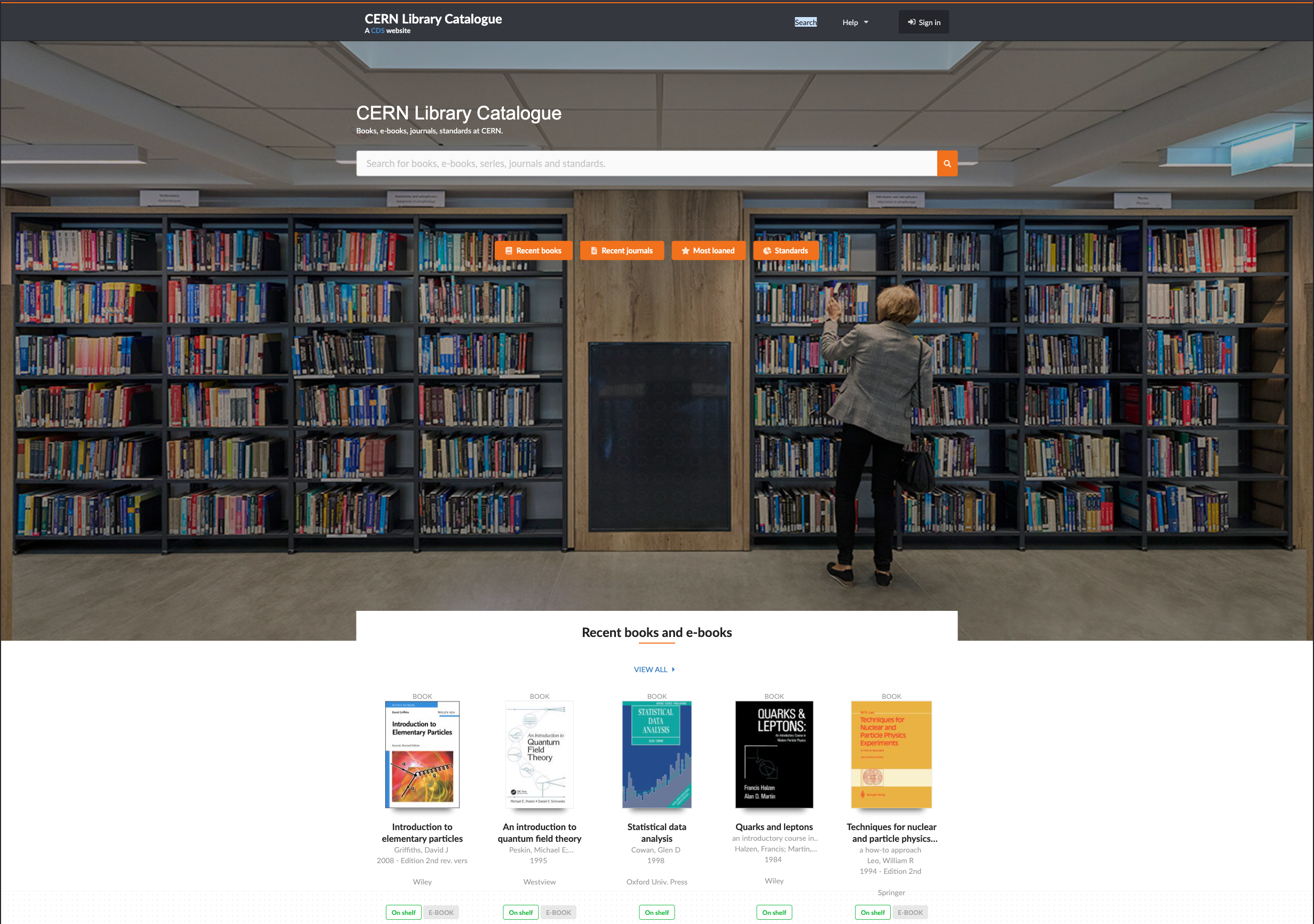
Smooth SSO integration
InvenioILS connects seamlessly to CERN’s institutional Single Sign-On, providing automatic user provisioning, role synchronization, and a unified login experience across CERN services.
Bulk e-book importer (CERN customisation)
CERN uses an automated bulk importer to process large vendor MARC packages. Metadata is transformed, validated, and ingested with minimal staff intervention - turning what once took days into an efficient, scalable workflow.
Mobile self-checkout & campus navigation (CERN customisation)
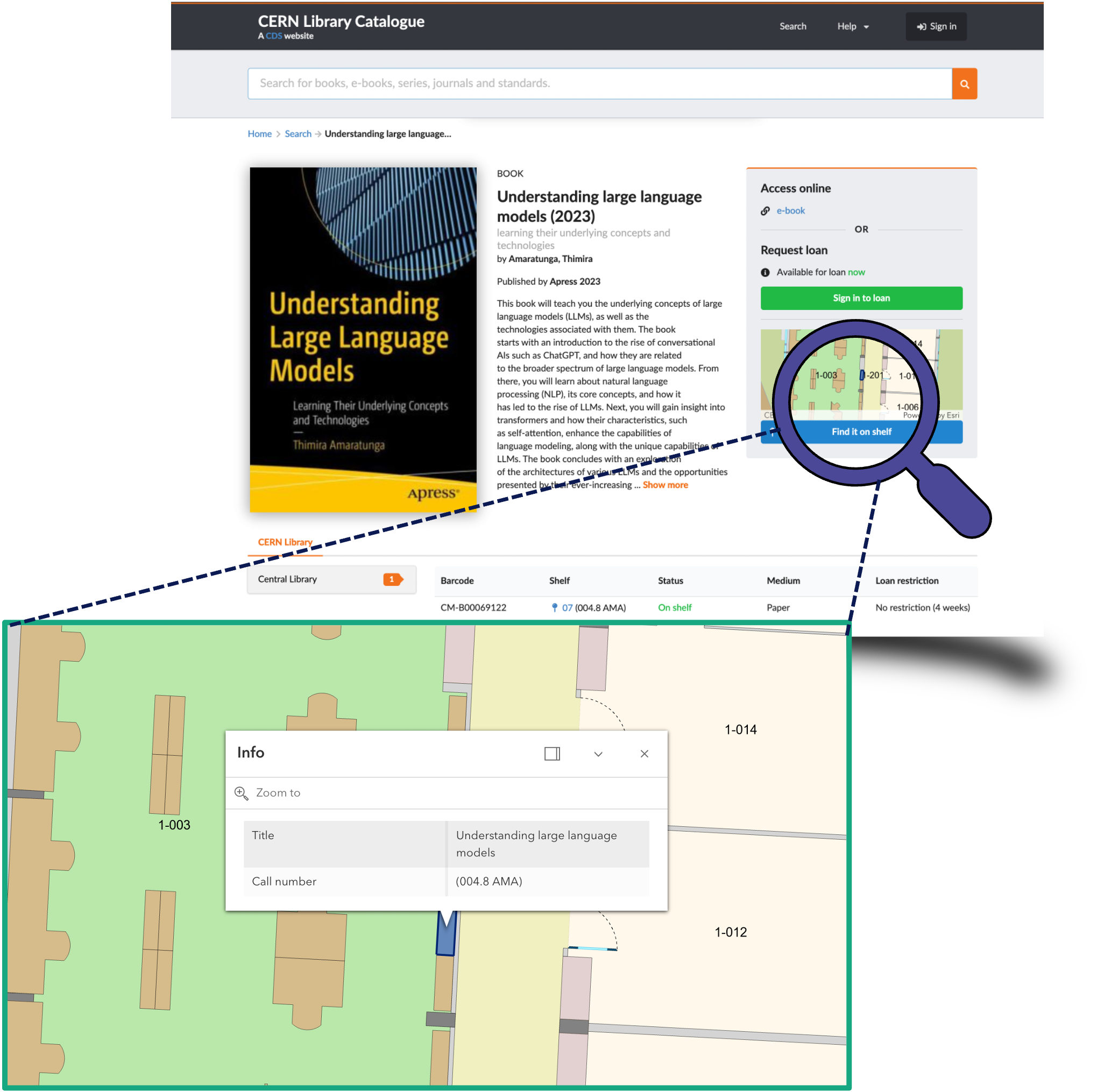
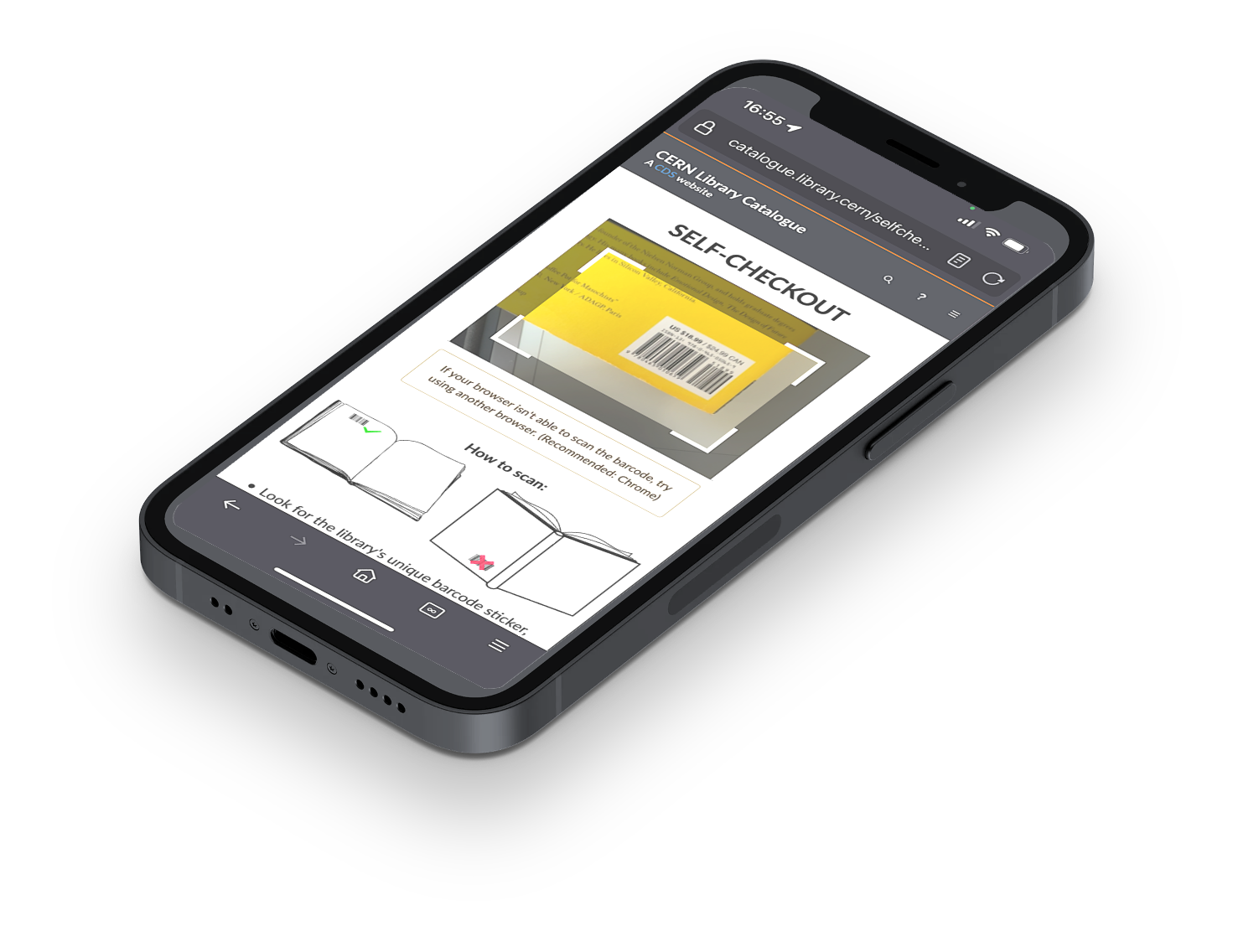
CERN’s library offers mobile self-checkout, enabling patrons to borrow items directly from their phones. Through InvenioILS APIs, the system also integrates with CERN’s internal navigation app, guiding users to shelf locations and showing real-time item availability.
Reliable at scale
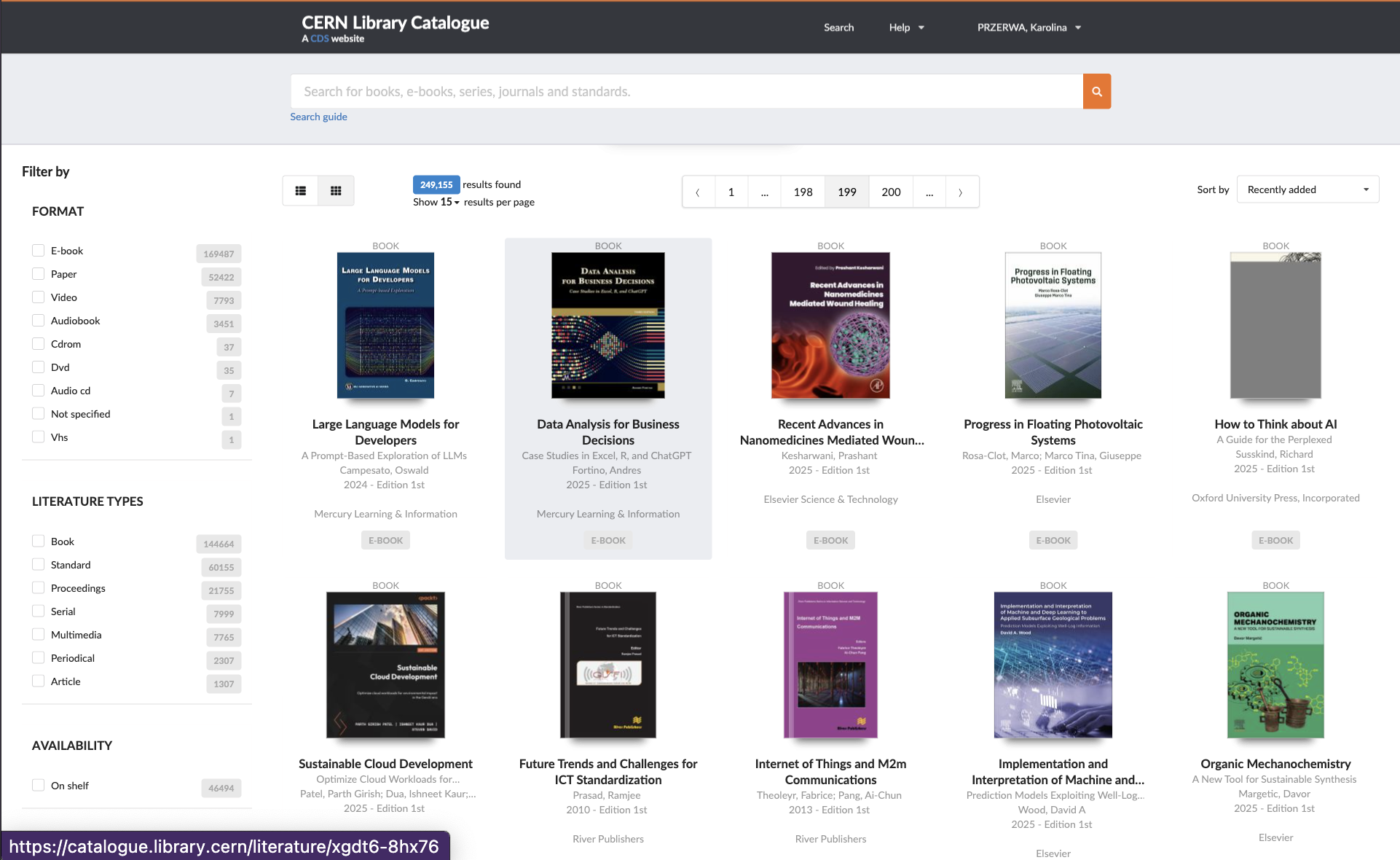
The CERN installation demonstrates how InvenioILS can support large user bases, extensive collections, and demanding operational environments - all while integrating with CERN Institutional repository, based on InvenioRDM.
Part of a product family
InvenioILS complements InvenioRDM and the broader Invenio framework, providing a cohesive platform for managing both library collections and research outputs. With shared components and infrastructure, institutions benefit from consistent authentication, indexing, APIs, and development practices across products.
Invenio does not only power repositories.
It powers libraries as well - with power of Free Open-Source Software
Join the Invenio community
InvenioILS and InvenioRDM thrive thanks to a global community of libraries, research organizations, developers, and service providers. Whether you’re evaluating Invenio, looking to contribute, or simply curious, you’re warmly invited to join. The InvenioRDM community meets regularly to discuss features, share insights, and collaborate on the future of open knowledge systems - we would like to recreate this approach for InvenioILS and hear your feedback. Your voice is welcome - come help, shape what’s next.
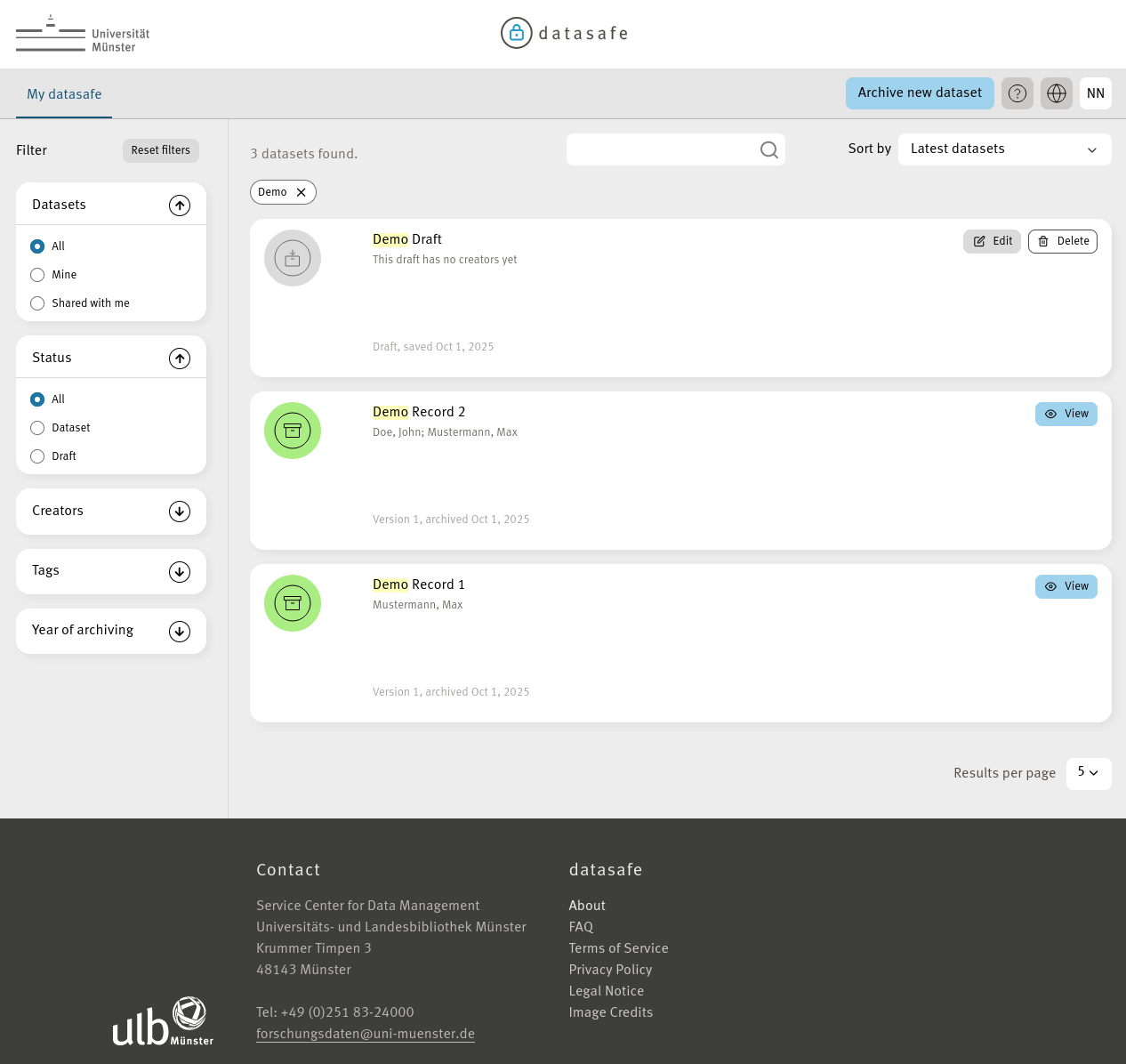
datasafe: Implementing a Dark Archive with InvenioRDM
We've recently completed a major overhaul of our research data archive, datasafe, which is now built on InvenioRDM. Our team at the University of Münster's University and State Library (ULB) has been working to implement this open-source software, tailoring it to meet the specific needs of our researchers.
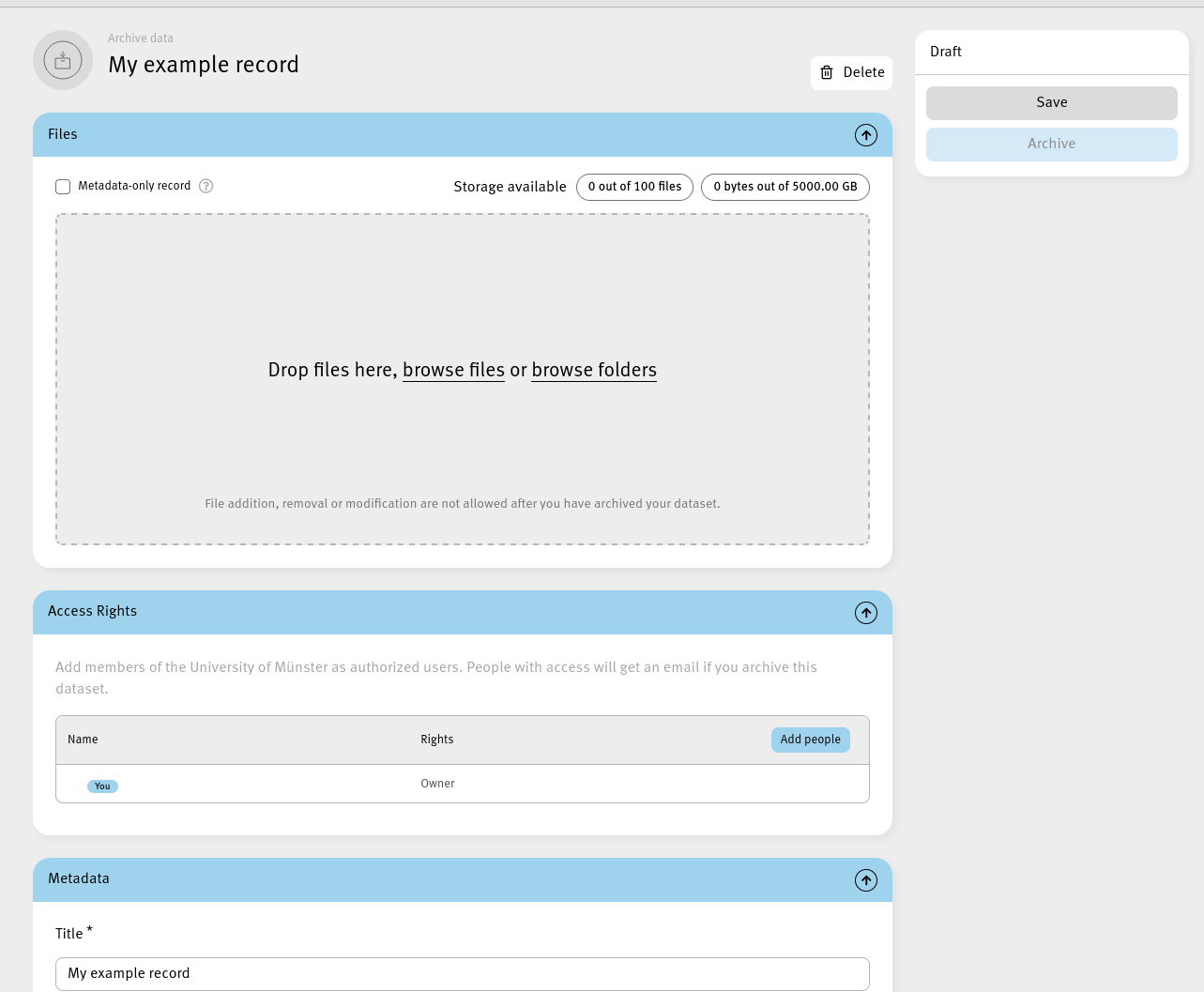
datasafe is designed as a dark archive, where researchers can deposit their datasets for long-term preservation. Once archived, the data will be retained for a minimum of 10 years, and up to 15 years, after which it will be automatically deleted. To streamline the process, metadata can be easily imported from our local Current Research Information System (CRIS).
One of the key benefits of using datasafe is the ability for researchers to demonstrate compliance with funder requirements for data storage. Upon archiving their data, users receive a certificate that confirms their datasets have been securely stored, making it easier to report to funding agencies.
A notable feature of our implementation is the heavily customized frontend, which provides a minimalist and modern interface. By simplifying the user experience, we've created an intuitive platform that meets the unique needs of a dark archive, where data is primarily stored for preservation purposes rather than dissemination. This approach allows researchers to easily deposit and manage their data, while also ensuring the long-term integrity and authenticity of the archived materials.
Another significant improvement is the increased upload limit, now up to 5 TB in size. This community-driven feature, which our team helped implement, enables researchers to upload large files directly through their web browser into the underlying S3 storage backend, eliminating the former need for an SFTP server. This will greatly benefit researchers working with large datasets, allowing them to archive and preserve their data in a single, convenient location.
By building on InvenioRDM, we're able to leverage a community-driven solution that is actively maintained and developed by a global network of institutions and experts. We're pleased to be part of this community and look forward to sharing our experiences and feedback to help shape the future of the platform.
For those interested in learning more about our implementation of InvenioRDM, you can contact our team at forschungsdaten@uni-muenster.de!
Ensuring the Future of Digital Repositories in West and Central Africa: A Case Study on BAOBAB and Sustainable Repository Development
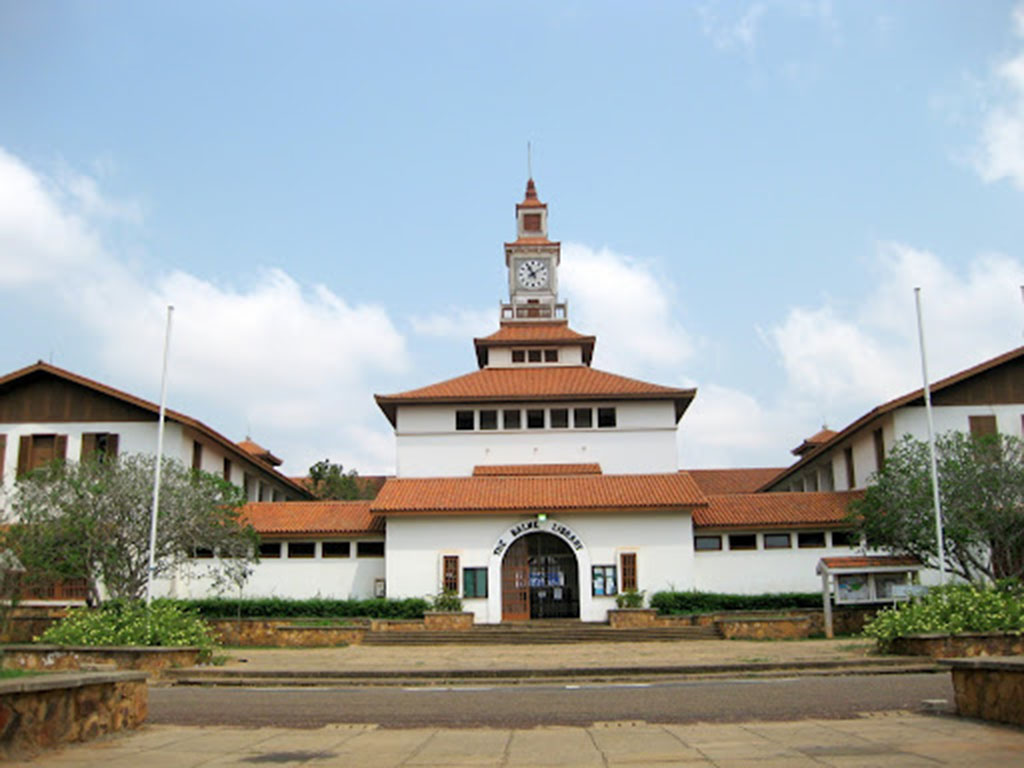
In today’s rapidly digitizing research landscape, the ability to preserve and share knowledge openly is not just a technological challenge, it’s a matter of equity and innovation. Yet, across much of West and Central Africa, many institutions still struggle with inadequate infrastructure for digital preservation. As I shared at a recent OR2025 session, this is where BAOBAB comes in.
Why Repositories Matter
Open Access repositories are critical tools for fueling collaboration, driving innovation, and reducing information inequality. But for many African universities and research centers, significant barriers, from unreliable digital systems to a lack of preservation strategies, hinder their ability to contribute to and benefit from the global research ecosystem.
Introducing BAOBAB
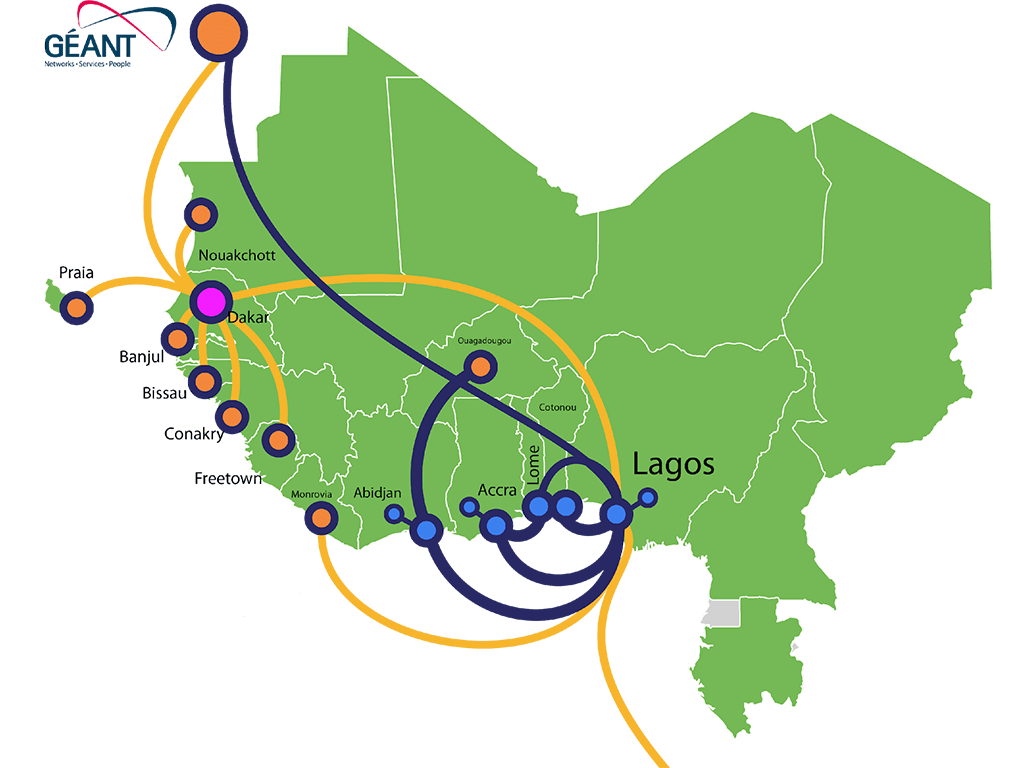
Launched in 2024 by WACREN, the West and Central African Research and Education Network, BAOBAB is an InvenioRDM-based regional repository service designed to close these gaps. As of now, it supports more than 14 institutions across 8 countries, including public universities, research councils, and technical institutes. What sets BAOBAB apart is its ability to offer a centralized infrastructure while preserving local institutional autonomy, a model that ensures scalability without sacrificing ownership.
Tackling the Challenges
Before BAOBAB, institutions operated in silos. Many lacked reliable backup systems, and technical capacity varied widely. This often led to duplicated efforts and even loss of valuable data. BAOBAB’s shared, cloud-based platform reduces the technical burden for individual institutions, while a community-driven governance model ensures the service evolves with user needs.
What’s Inside the Repository?
BAOBAB has quickly become a treasure trove of African research. From PhD theses and conference papers to datasets, the repository ensures materials are enriched with multilingual metadata and accessible through persistent identifiers. That last point is key.
Why ARKs?
BAOBAB adopts ARKs (Archival Resource Keys) as its persistent identifier system. Why? Because they’re:
- Cost-effective and flexible
- Free from vendor lock-in
- Interoperable with existing and future PID systems
Each item in BAOBAB automatically receives an ARK, ensuring it can be reliably found and cited over the long term.
Building for the Long Run
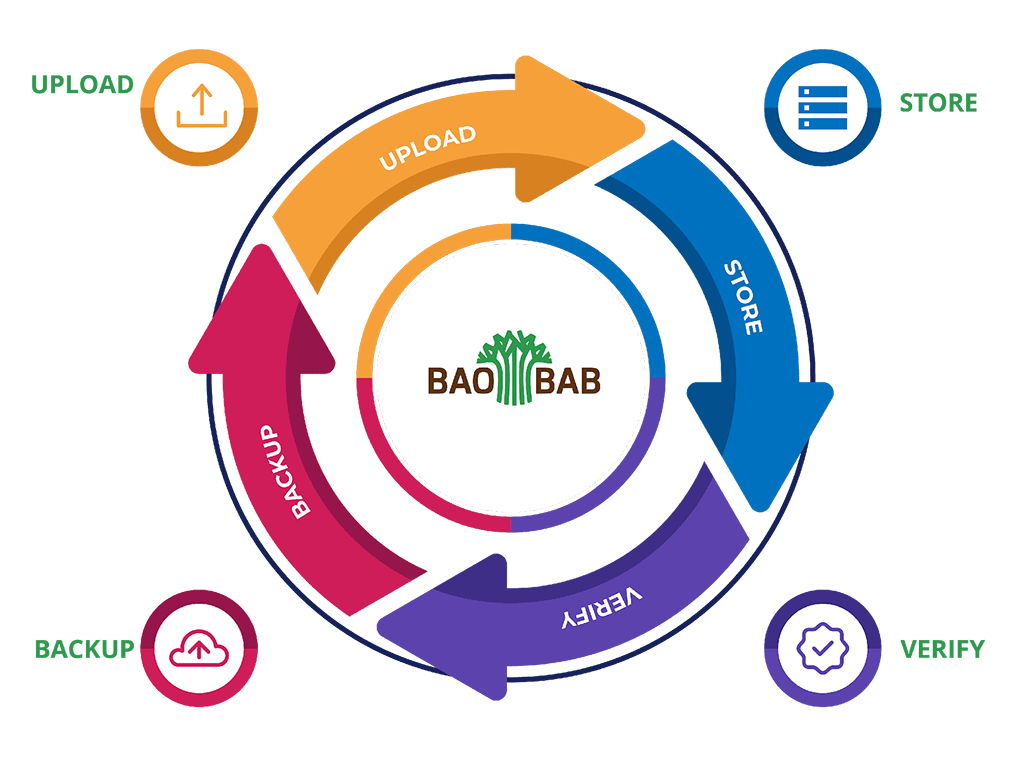
But identifiers alone don’t guarantee preservation. BAOBAB is developing a comprehensive digital preservation strategy, including:
- A formal preservation policy
- Offsite backup strategies
- Regular file fixity checks
- Compliance with international metadata standards
These efforts aim to make the repository resilient, even in the face of funding or infrastructure challenges.
Learning from Global Peers
BAOBAB didn’t start from scratch. It was inspired by global leaders in repository development, including:
- LA Referencia in Latin America
- HAL in France
- The Africa Open Science Platform
These models were carefully studied and adapted to local realities—proving that global solutions can be tailored to local contexts.
Measurable Impact
Since its launch, BAOBAB has archived over 408 documents, reduced duplication across participating institutions, and improved the visibility of African research on a regional and international scale. That’s not just a technical win, it’s a step toward equity.
A Blueprint for the Continent
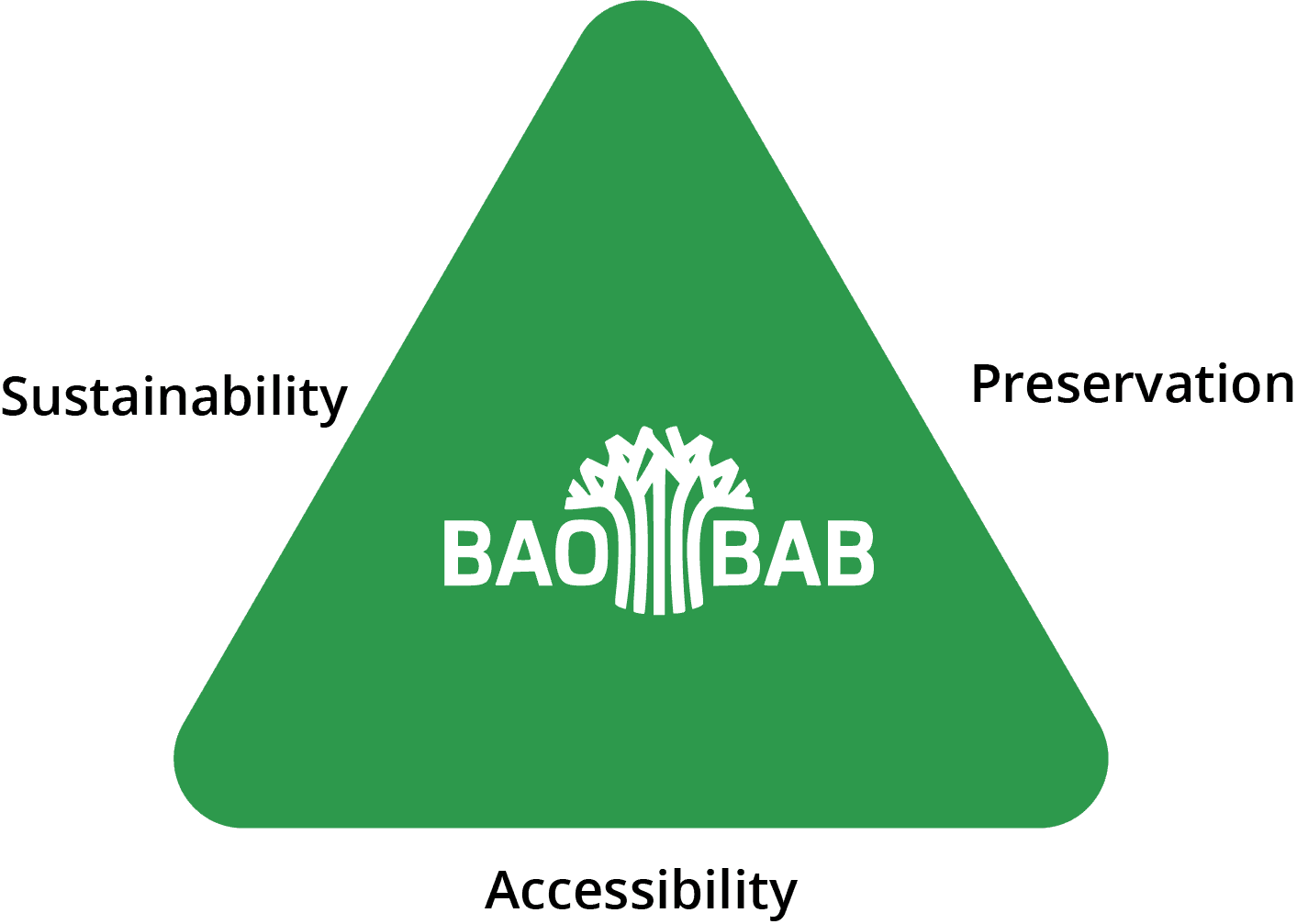
BAOBAB is more than a platform, it’s a blueprint for sustainable repository development across the continent. It shows that with thoughtful design, community involvement, and the right infrastructure, even resource-constrained regions can lead in Open Access.
Final Thoughts
Sustainable, equitable, and locally owned repositories aren’t just possible, they’re essential. BAOBAB’s success offers hope and a roadmap for other regions aiming to strengthen their research infrastructure. At WACREN, we believe the future of African research lies in collaboration, openness, and resilience.
Let’s build it together.

InvenioRDM v13.0 released
We are excited to announce the release of InvenioRDM v13.0 on July 23, 2025! This new version brings a host of new features and improvements, building upon the strong foundation of previous releases.
Try it
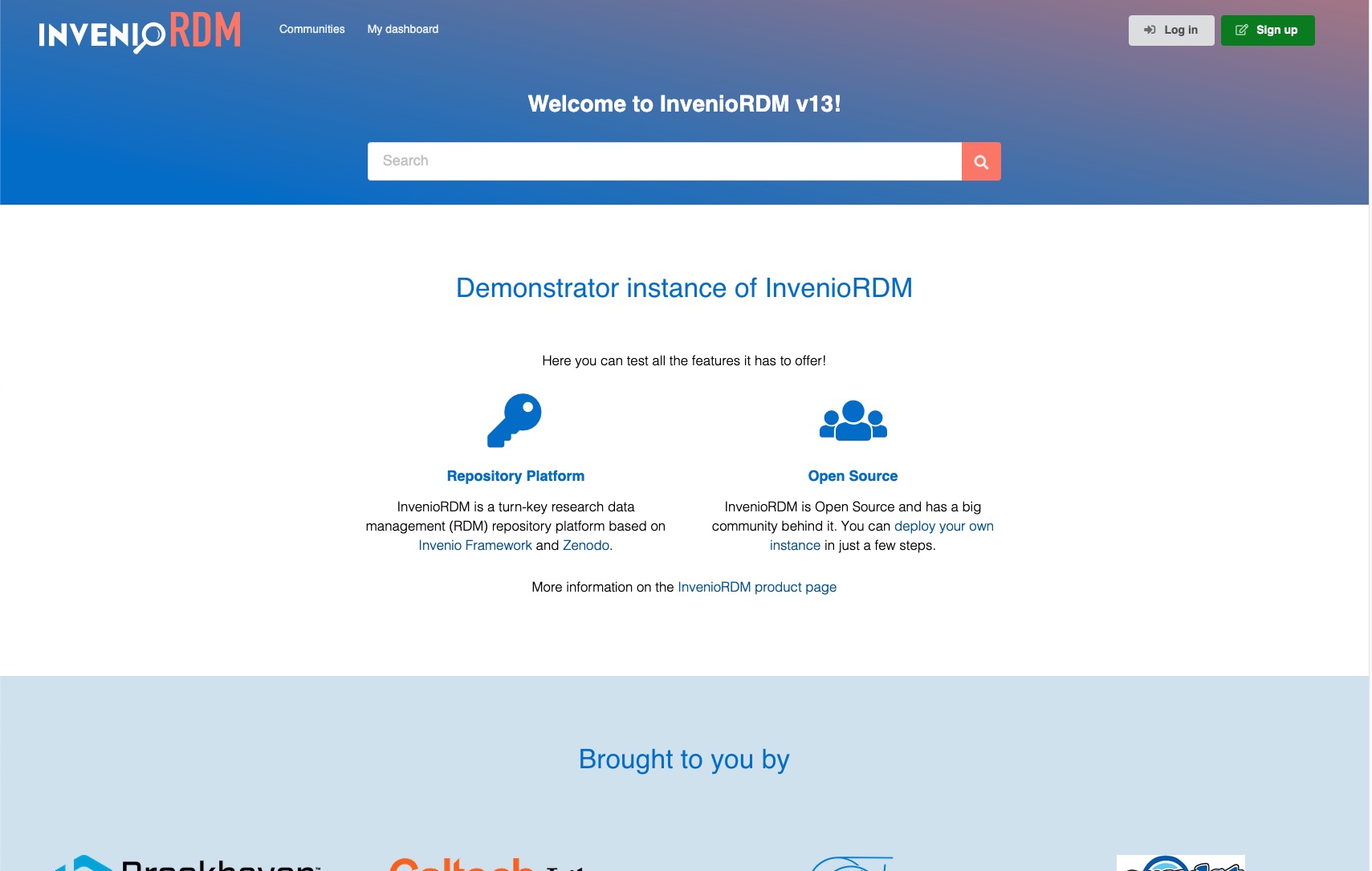
Want to try the new features in v13.0? Just head over to the demo site. If you want to install it, you can follow the installation instructions.
Release Notes
See the full release notes for details on all the new features, and the upgrade guide for instructions on how to upgrade from your v12 instance to v13.
What's new?
InvenioRDM v13.0 focuses on enhancing administrative capabilities, improving community features, and introducing powerful new tools for data management and organization. Here are some of the major highlights, be sure to check the release notes for a comprehensive list of new features and improvements.
Communities enhancements
The Communities functionality has been significantly expanded with exciting new features:
Themed communities
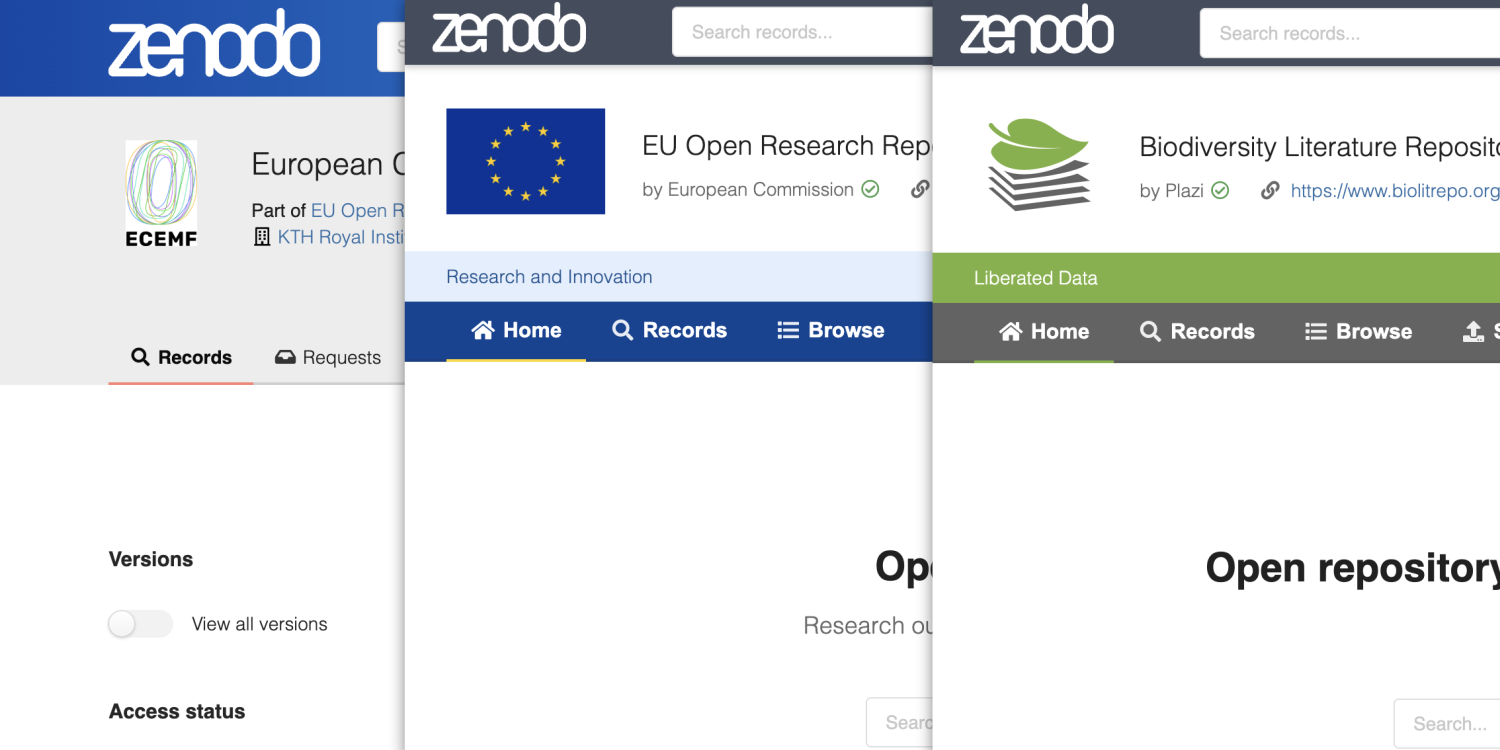
Communities can now be customized with unique fonts, colors, and homepages. These themes apply to all community pages, including records and requests, allowing for a more branded and distinct user experience.
Subcommunities
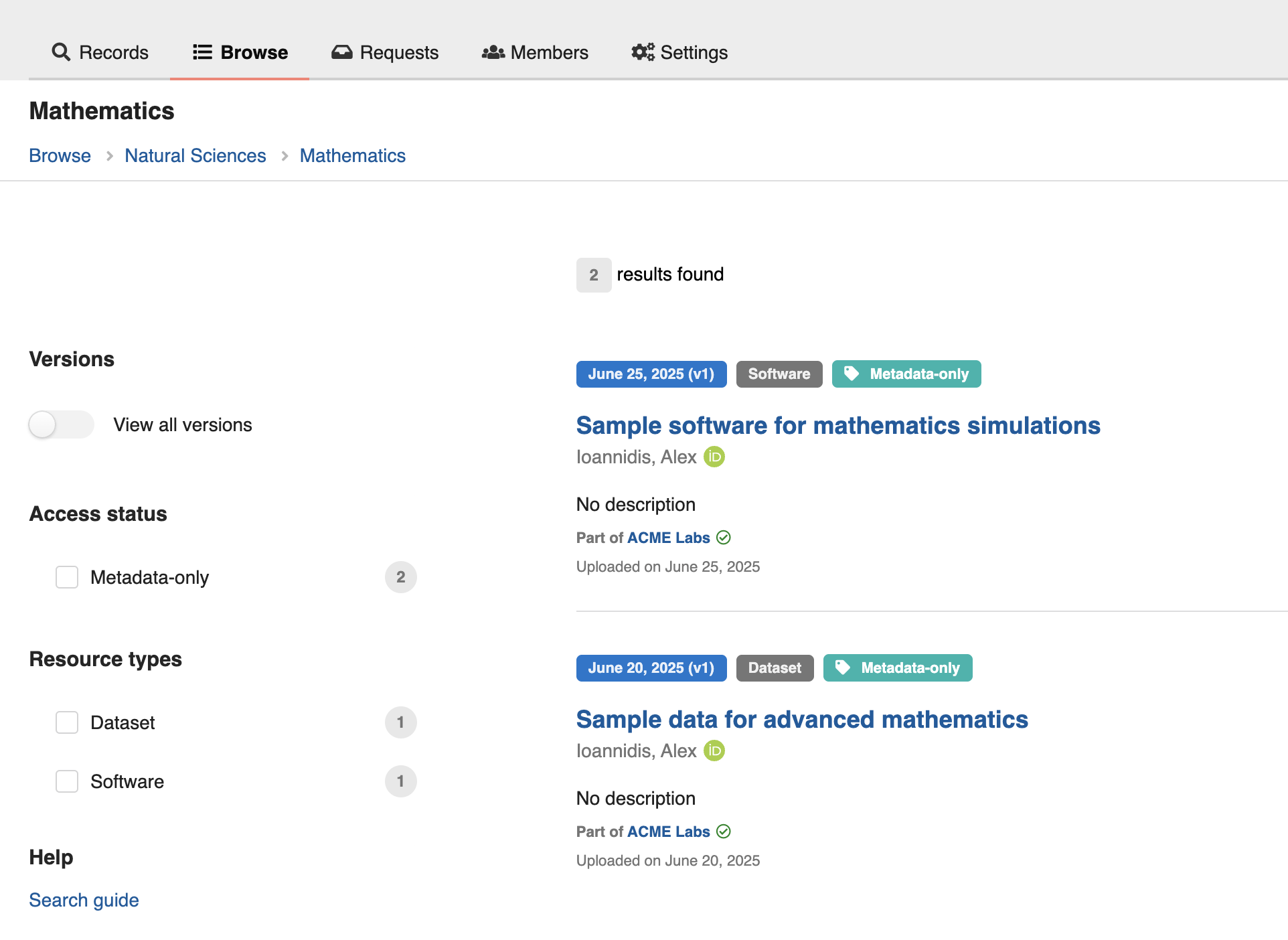
InvenioRDM v13.0 introduces hierarchical relationships between communities through subcommunities. This allows for structured organization, where records from child communities are automatically indexed in parent communities. A dedicated "Browse" page lists subcommunities and collections, providing a clear overview.
Collections
Collections are a powerful new feature enabling dynamic, query-based groupings of records that automatically update. Collections provide dedicated pages for records matching specific criteria and can be organized hierarchically by subject, resource type, funding program, or other metadata fields. This is ideal for grouping content by research disciplines, publication dates, or funding programs.
Curation checks
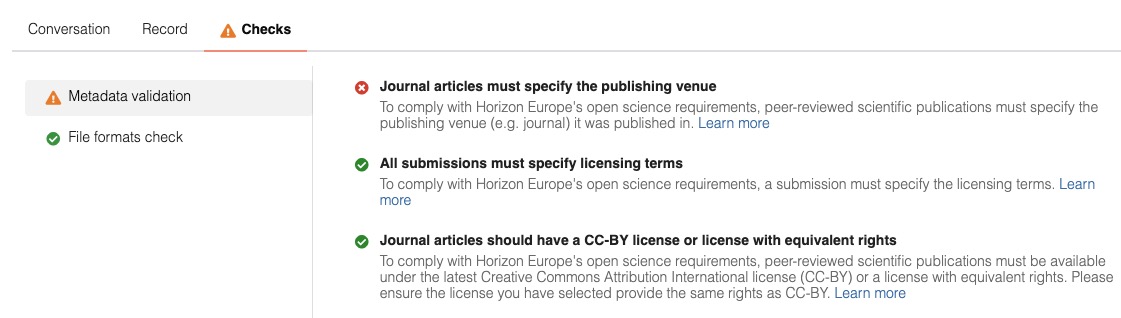
It is now possible to configure automated checks in your communities to provide instant feedback on draft review and record inclusion requests. Checks provide feedback to both the user and reviewer that submissions to your community are compliant with your curation policy.
Files uploader & S3-compatible storage
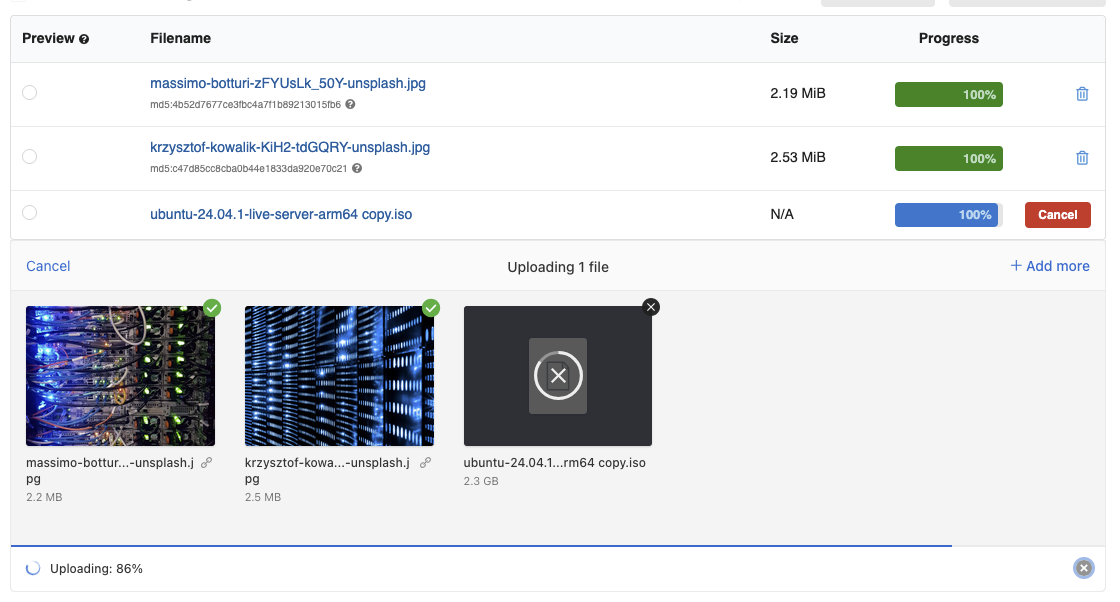
The new file uploader delivers a faster, more intuitive, and modern file upload experience. It also enables advanced features such as multipart file transfers with S3-compatible storage backends.
FAIR Signposting
With v13, you can now enable support for FAIR Signposting level 1 in addition to the automatically enabled level 2.
Sitemaps
InvenioRDM v13 introduces the automatic generation of sitemaps to help search engines and other crawlers discover and index your repository's content. Sitemaps are even automatically linked in your robots.txt.
DOIs on demand
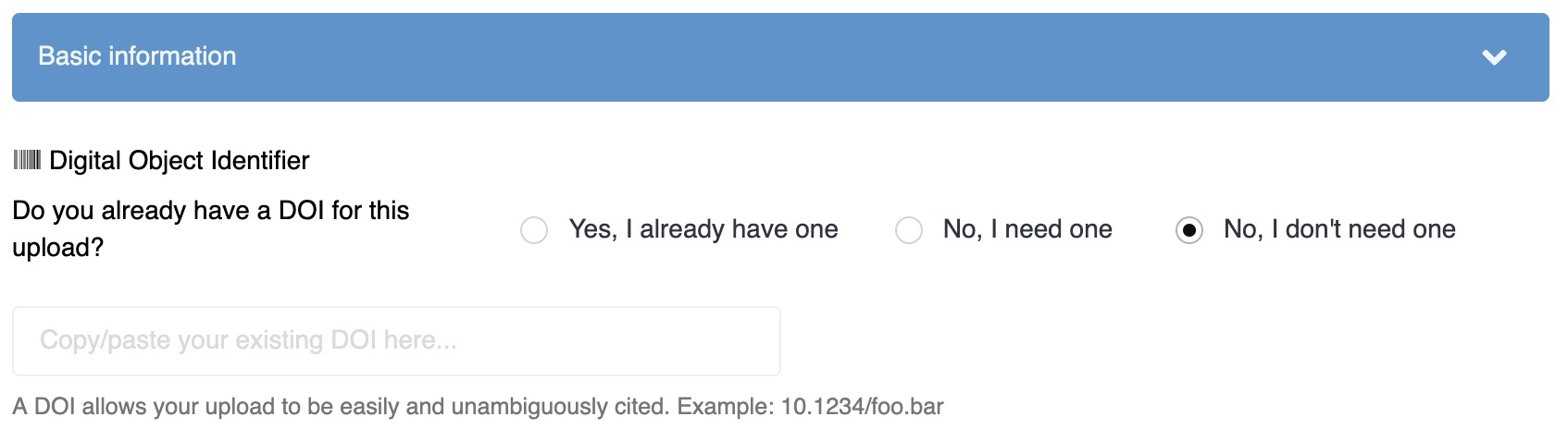
You can now let users to choose if they need a DOI or not when uploading.
New metadata fields
We have introduced new metadata fields that will allow you to capture more useful information when uploading:
- A dedicated copyright field is now available, ensuring clear and comprehensive copyright information.
- We've added a new Thesis set of optional metadata fields. We've also reorganized the thesis section, grouping thesis fields together.
- The edition field has been introduced under the Imprint set of optional metadata fields, providing a way to specify the edition of a book.
- A new identifiers field, composed of id and scheme, has been added to the Meeting set of optional metadata fields.
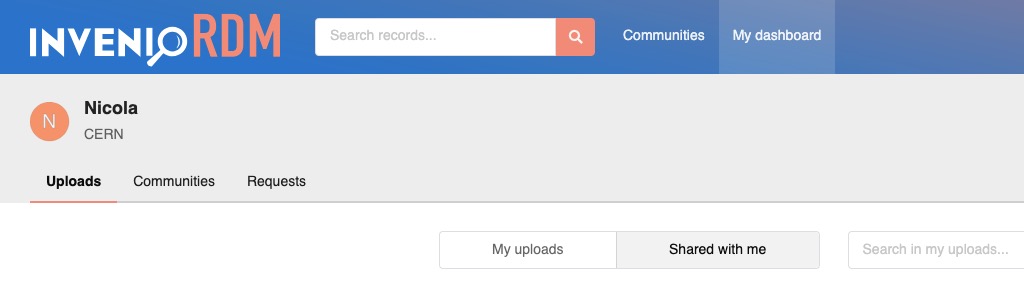
Dashboard: shared with you
You can now easily find records and requests shared with you.
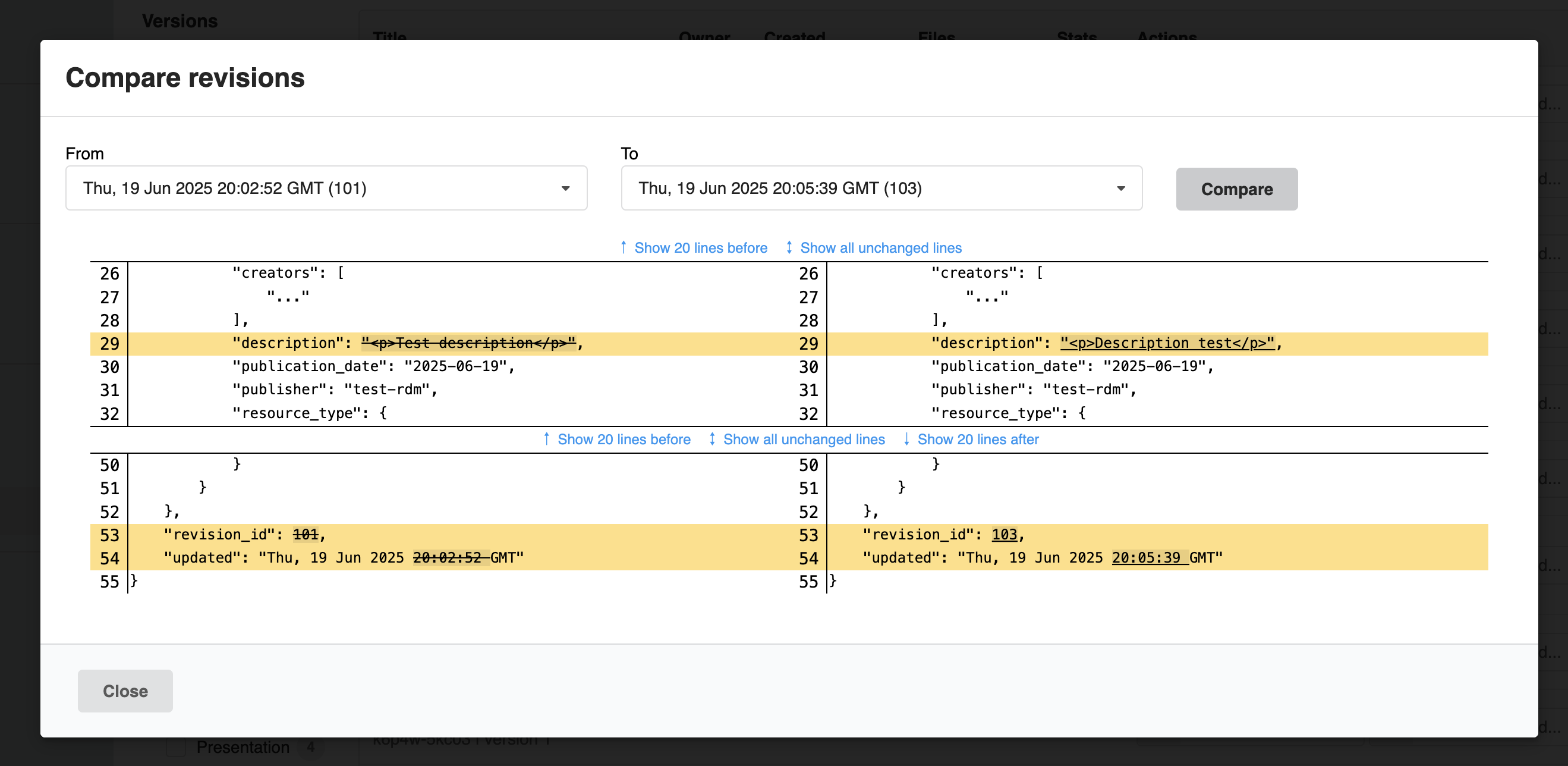
Compare revisions
A brand new compare revisions feature has been introduced, allowing administrators to audit record updates and track changes over time. This provides a transparent history of modifications, crucial for data integrity and compliance.
Audit Logs
A significant addition is audit logs, a new feature designed for tracking system activities and providing a detailed record of events accessible from the administration panel.
Jobs
This release introduces a new jobs feature, providing a comprehensive way to manage asynchronous tasks via the UI or REST API. Jobs are triggered via the admin UI or REST API, run using Celery, and support logging, argument validation, and result tracking.
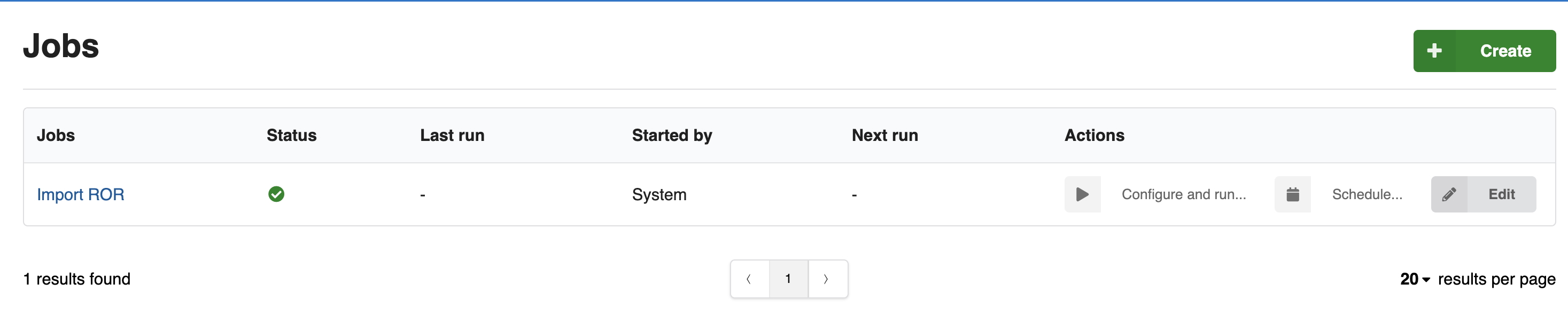
Jobs can be very useful to setup automatic recurrent fetching of ROR and ORCID databases or other vocabularies.
Breaking changes
Make sure to read the Breaking Changes section in the release notes.
Requirements
InvenioRDM v13 requires:
- Python 3.9 (end of life October 2025), 3.11 and 3.12
- Node.js 18+
- PostgreSQL 12+
- OpenSearch v2.12+
Questions
If you have questions related to the InvenioRDM v13.0 release, don't hesitate to jump on Discord and ask us!
Credit
The development work of this impressive release wouldn't have been possible without the help of these great people (name or GitHub handle, alphabetically sorted):
- Adrian Moennich
- alejandromumo
- Alex Ioannidis
- Alzbeta Pokorna
- Anika Churilova
- Austin Sharp
- Brian Kelly
- Carlin MacKenzie
- Christoph Ladurner
- Cristian Pogolsha MBP
- Dan Granville
- David Eckhard
- David Glueck
- ducica
- Eduard Nitu
- Emil Dandanell Agerschou
- Eric Newman
- Eric Phetteplace
- Esteban J. G. Gabancho
- Fatimah Zulfiqar
- Felipe Carlos
- Florian Gantner
- Furkan Kalkan
- Guillaume Viger
- Hrafn Malmquist
- Ian W. Scott
- Janne Jensen
- Javier Romero Castro
- Karl Krägelin
- Karolina Przerwa
- libremente
- liptakpanna
- Martin Fenner
- Martin Obersteiner
- Matt Carson
- Maximilian Moser
- mb-wali
- Michael Groh
- Mirek Simek
- Miroslav Bauer
- mkloeppe
- Nicola Tarocco
- Pablo Panero
- Pablo Saiz
- Pablo Tamarit
- Panna Liptak
- roll
- Saksham Arora
- Sam Arbid
- Sarah Wiechers
- Tom Morrell
- Werner Greßhoff
- Will Riley
- Yash Lamba
- Zacharias Zacharodimos